I’m not a bird photographer (but swans are awesome)

I’m not a bird photographer (but swans are awesome)

I’m losing track of how many times I have been out in nature taking pictures when passers-by have stopped, looked in the direction that my camera was pointing, and asked, “What are you looking at?” In most cases, it turns out that what they are actually asking is, “What rare bird have you spotted?”

To most people, a middle-aged man carrying a “real” camera (as in, not a cell phone) in nature means that he is a bird photographer. The concept of just taking a picture of the landscape, or a tree, or a creek is apparently very foreign to the average person. At least, they seem quite surprised when I explain it to them, and they quickly move on. Not interested.

And it’s not that I don’t see the point of bird photography. I would love to be a great bird photographer, but 1) I can’t tell a seagull from an eagle, 2) I don’t have the patience required, and 3) I can’t afford the lenses bird photography calls for. The last point should be a dead giveaway to those who think I’m a bird photographer. How could I possibly be a bird photographer when the lens attached to my camera is a 300 mm at best? Don’t people know that you need at least a 400 mm lens for that?

Now, all this doesn’t mean that I haven’t been known to push the release button if a bird happens to enter my focus area and that I haven’t taken some fairly awesome photos featuring birds. I believe I have. And there is one bird that is an exception to everything I have just said about me and bird photography: swans. While you cannot call me a bird photographer, I would definitely categorize myself as a swan photographer. I love swans. They are some of the most beautiful and most photogenic animals on the planet. Especially the kind that you find in my neck of the woods: the mute swan. It also happens to be the national bird of Denmark, and I for one am thrilled about that.

To an actual bird photographer, swans are probably what a Toyota Corolla is to a car enthusiast. Plain, common, and boring. Not to me. They may be common, but they are anything but plain and boring. In fact, they are majestic and inspiring. The challenge in swan photography lies in catching them in the right surroundings and having them pose, or interact with each other, in an interesting way. That requires a certain amount of patience and time spent observing them.

My interest in swans, I think, comes from my wife, the American, who wasn’t used to the kind of swans we have in Denmark and made me open my eyes to their beauty. I mean, I grew up here and was used to swans and, like with so many other things before photography changed how I look at just about everything, I never really gave them much thought.

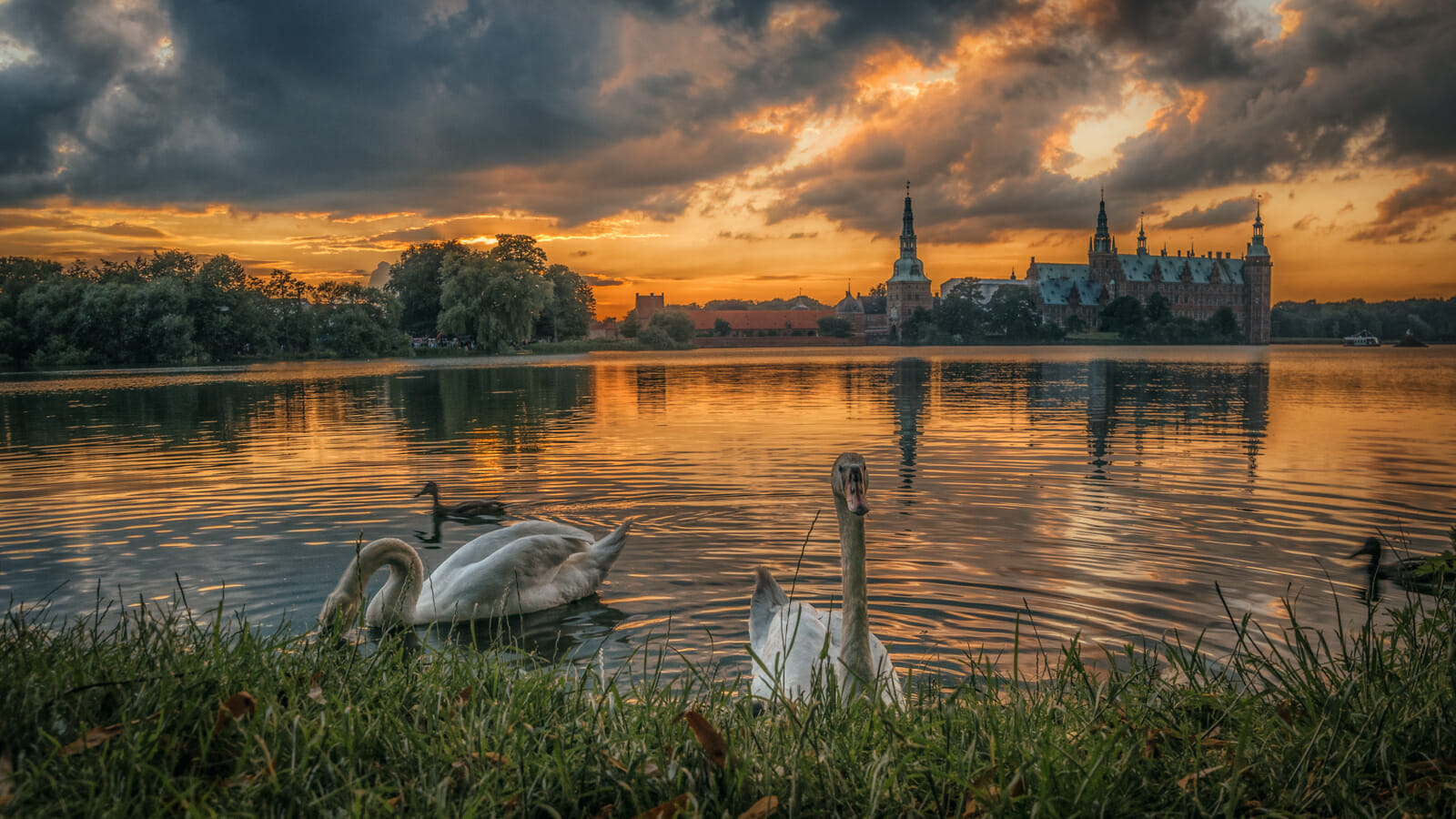
Another boost to my swan fascination came with the image below. It was taken not too long after I got my first “real” camera (my Sony A33) and is probably still among the three best photos I have ever taken (which, in a way, is a little sad considering all the practice I have gotten since). Look at that composition! How the swan on the left provides perfect balance to the castle on the right, and how the swan in the center of the image looks straight into the camera. Sure, I have enhanced it and turned the “magical fairy tale” knob to 10, but I like it. And it really made me consciously seek out swans to include in my images ever since.
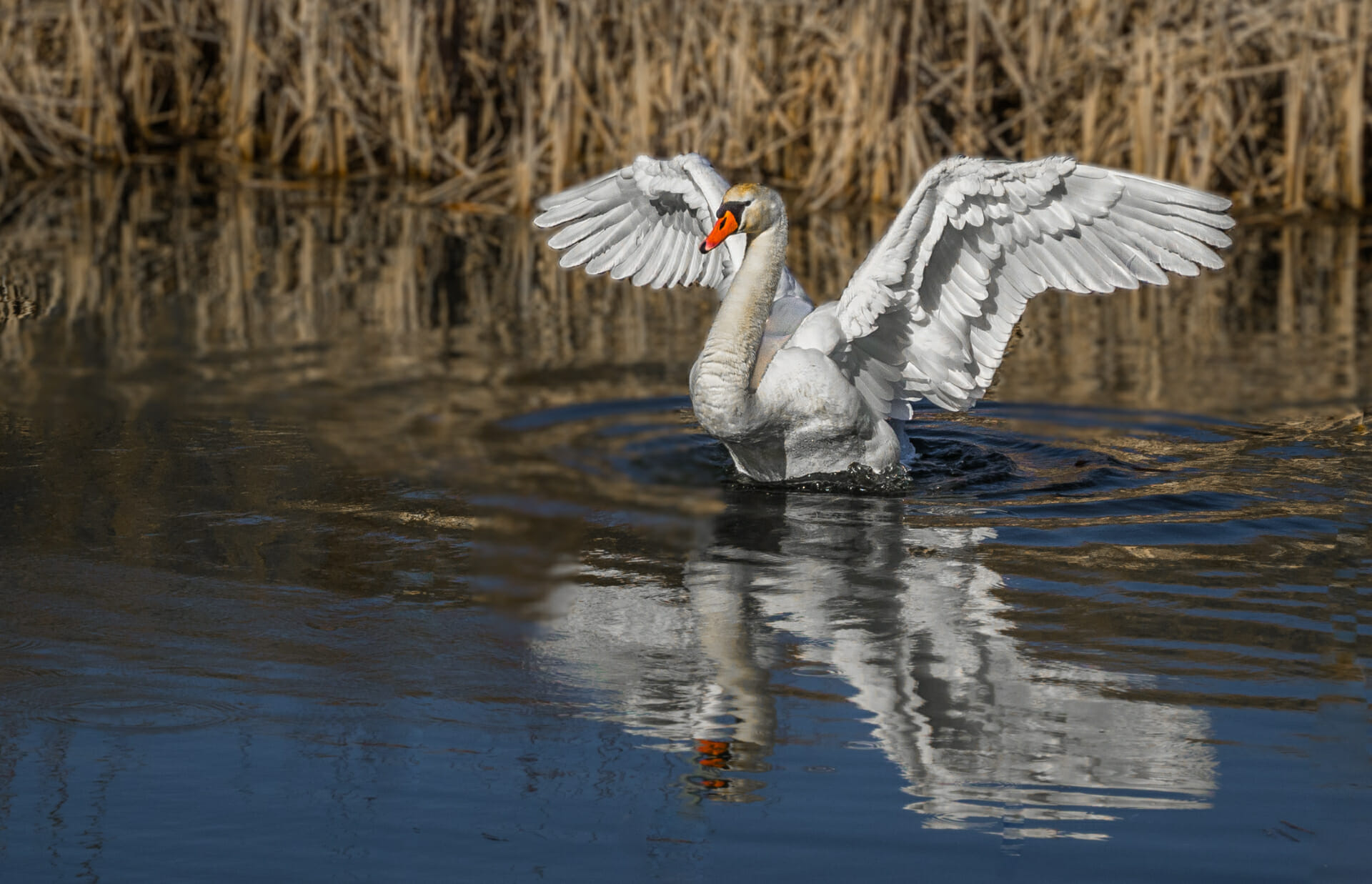
The next image is also several years old and is my first picture of a swan with its wings spread out. It looks like an angel. Now, if you live next to swans and see swans every day, seeing them with their wings spread out like that may not be such a rare occurrence. But while I see swans quite often – probably once or twice a week – the times I have seen them in the last five years, with their wings spread out like that, can be counted on one hand. And catching them like that from the right angle and distance is even rarer. So it’s something I’m always hoping will happen when I head to a place with swans, and it almost never does.
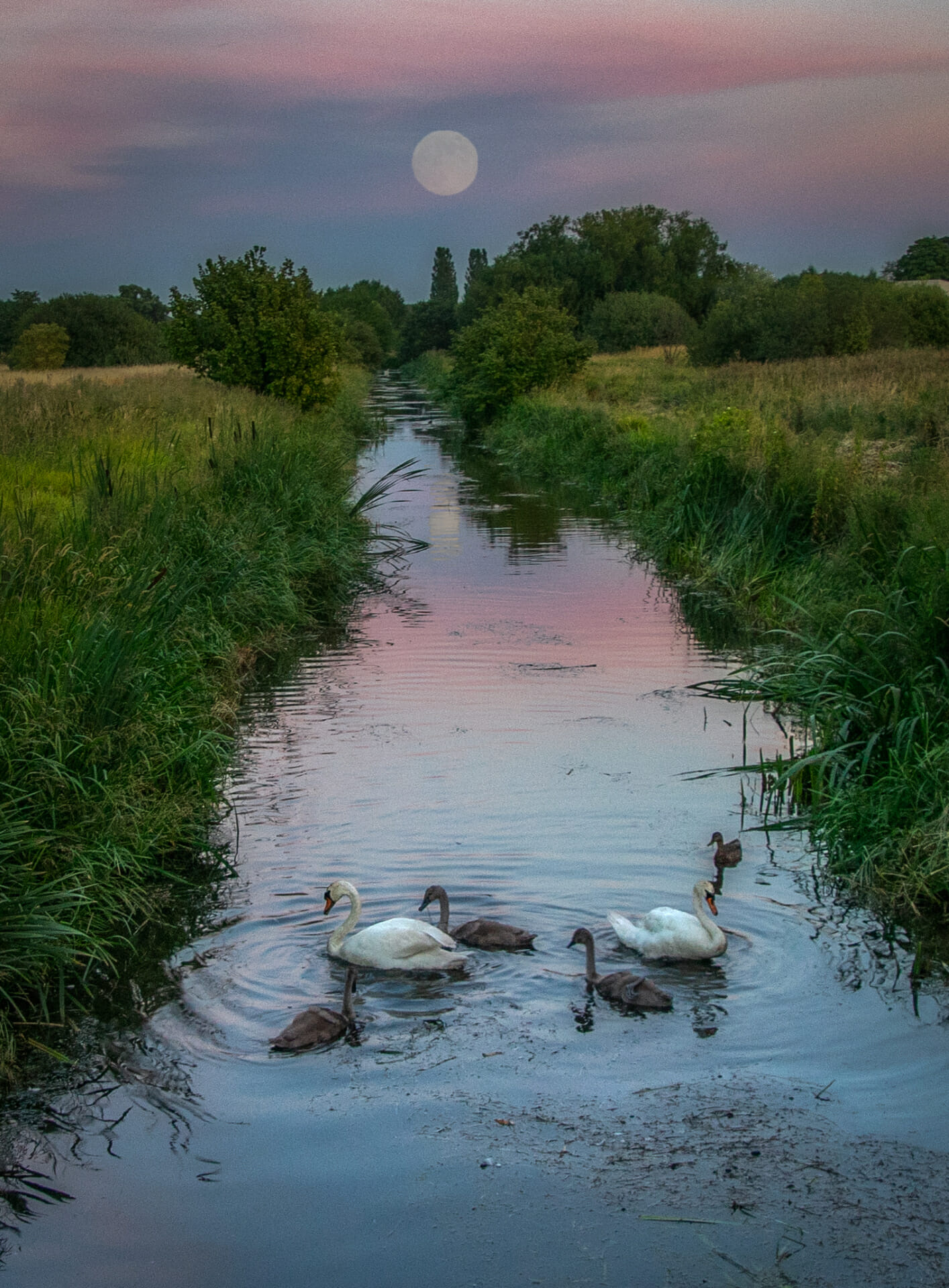
One of the things that make swans so special is their monogamy. They stick to the same partner for life and raise a new brood of cygnets every year. On a few occasions, my wife and I have followed a swan couple through a season and seen how they have built their nest, laid on their eggs, and taken their tiny new cygnets for a swim. And we have seen the cygnets grow and finally replace their gray ugly duckling plumage with beautiful white feathers. This can also be a heartbreaking experience as sometimes the swan couple will start out with six cygnets and then lose them one by one to predatory fish or birds until only a couple remain. In the below picture, a family of swans (and a friendly duck) is chilling in a local creek under the moonlight. All right, I admit, the full moon has been added, but the moon really was out that night, although not quite in such a favorable position.
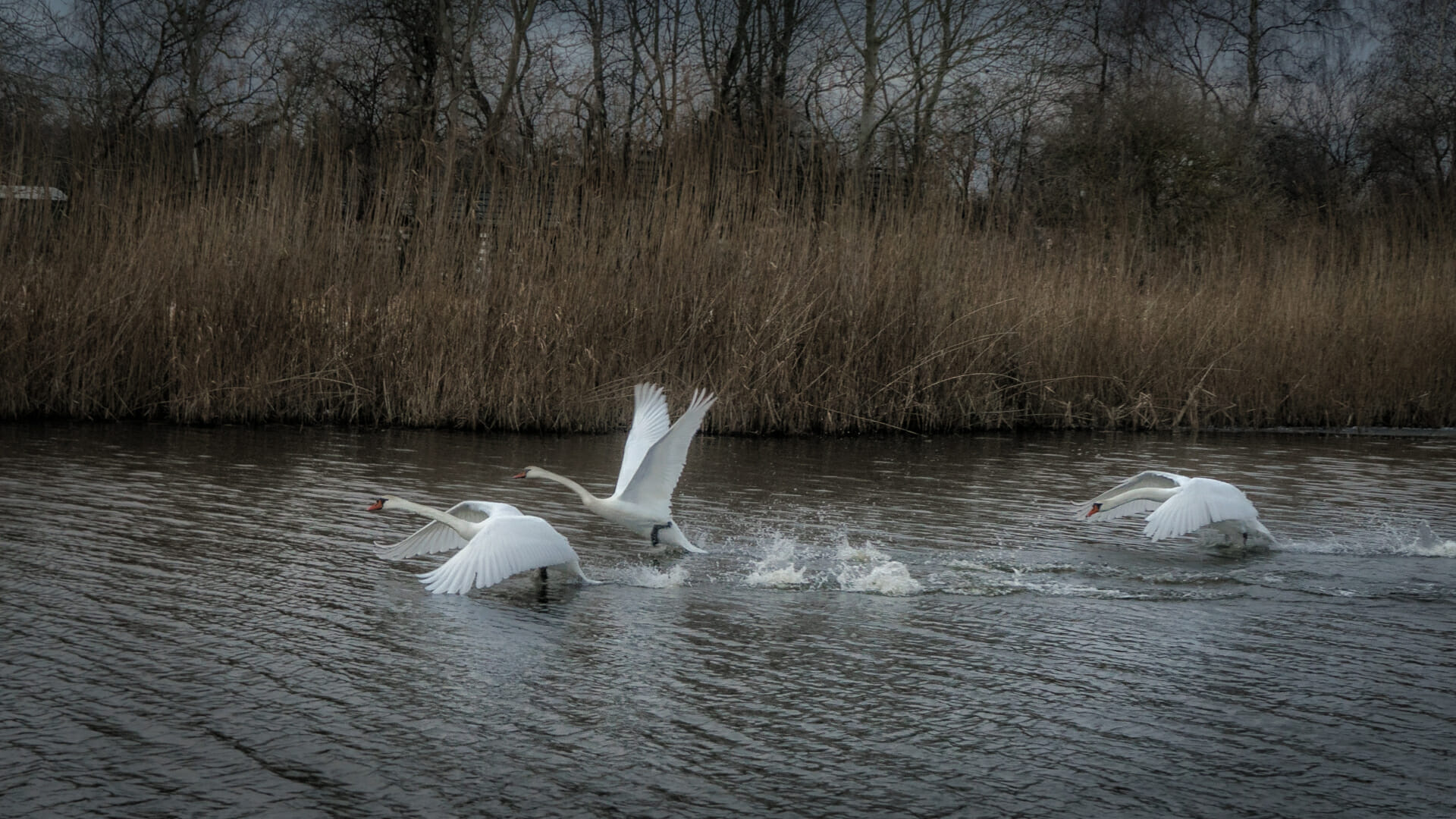
Swans do other things than just be beautiful and majestic. They can be some nasty birds and apparently very territorial. One afternoon I was walking along a lake when the below scene played out. One particularly angry swan was busy keeping his part of the lake free from other swans. It’s extremely dramatic when big birds like that get in each other’s throats, and you really don’t want to make a swan cross. This was shot with a cell phone and turned out very well for me, but at the expense of the poor couple that had ventured into the angry swan’s territory. Or maybe they were the bad guys who had ventured into the angry swan’s territory and got what they deserved. Who knows?
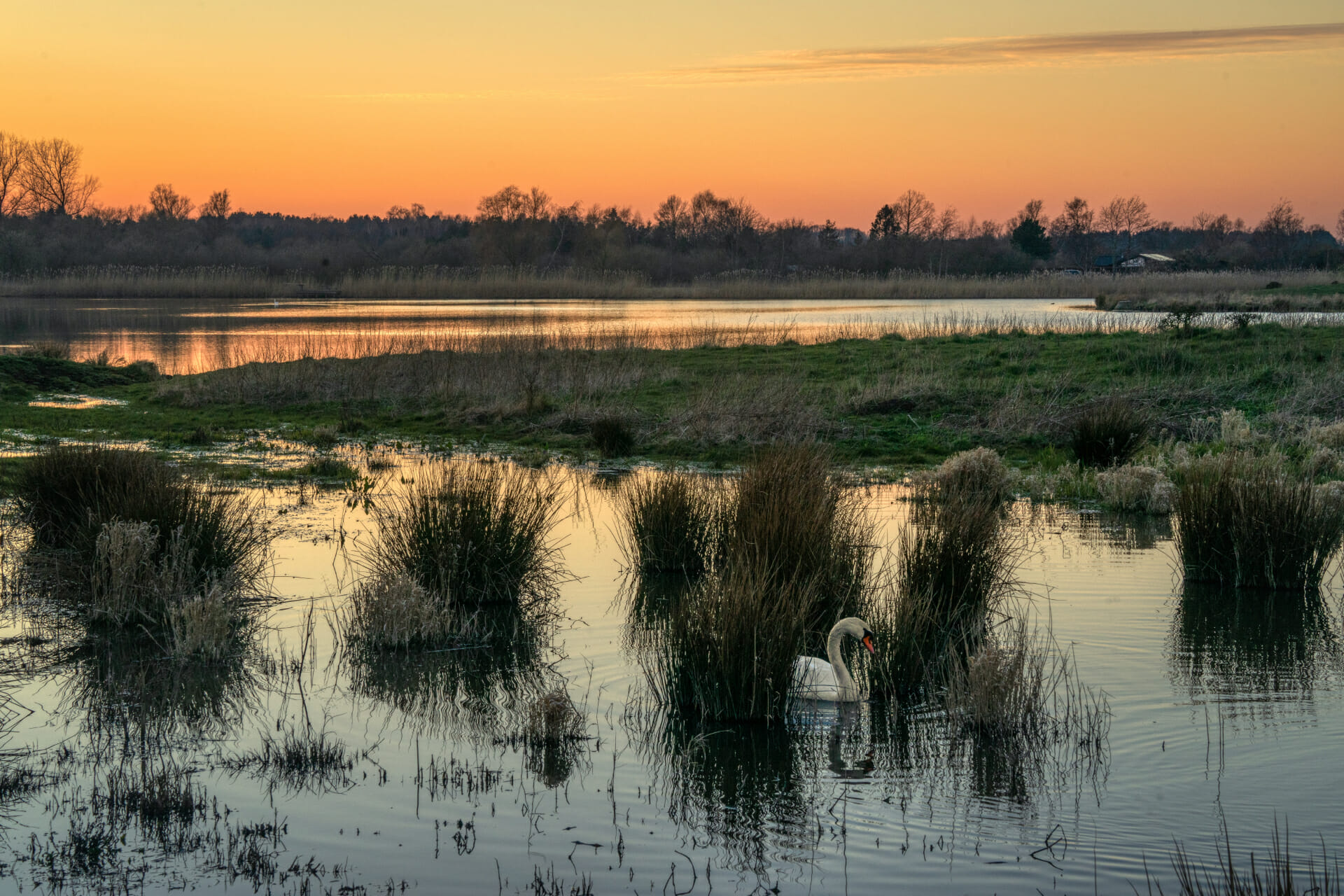
The next image is from the same lake and may even be one of the same swans, but a more common situation. There is nothing as serene and beautiful as a swan quietly drifting in and out between tufts of grass and waterweed during a sunset. They are like strange extra-terrestrial beings gracing our world with their other-worldly presence.
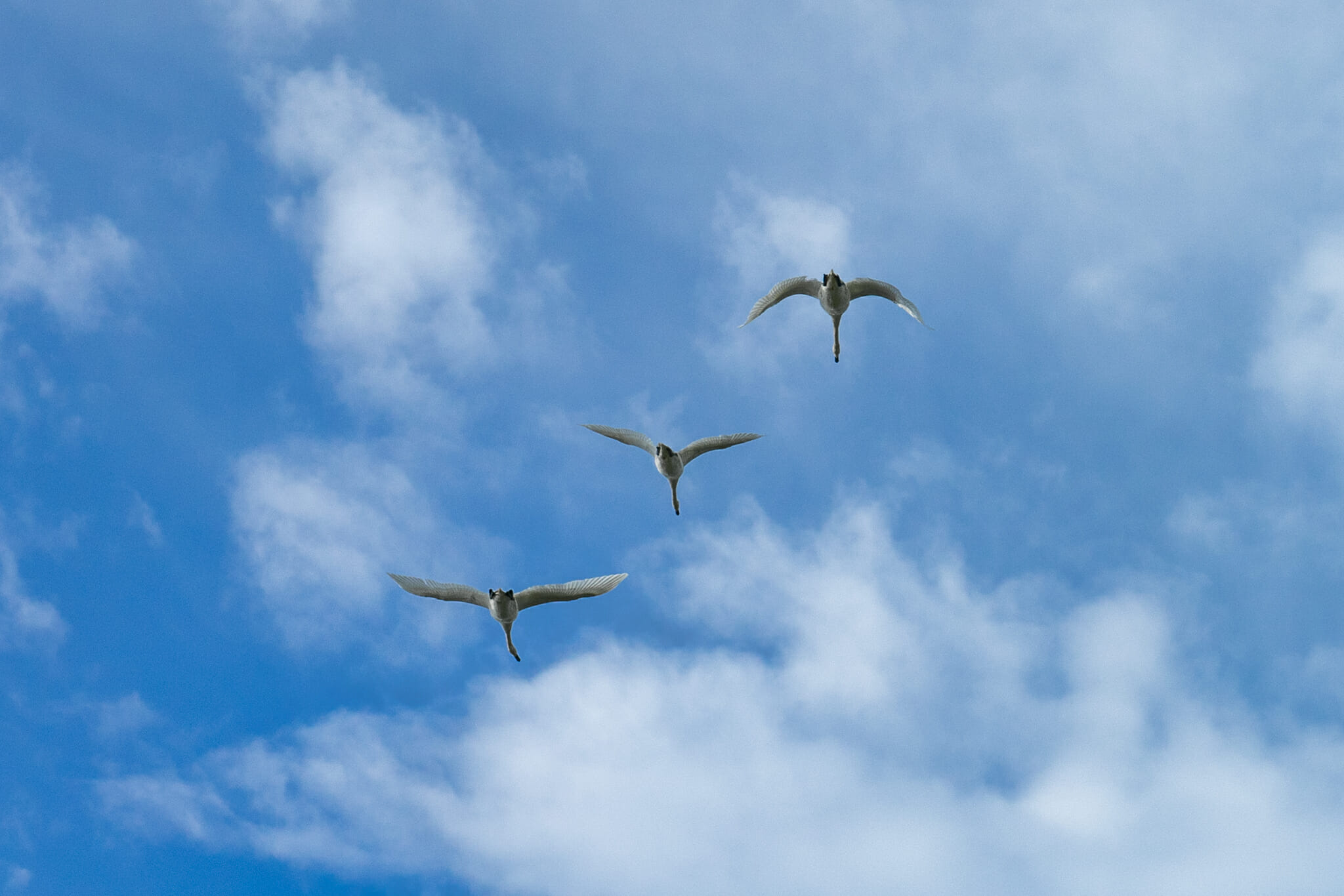
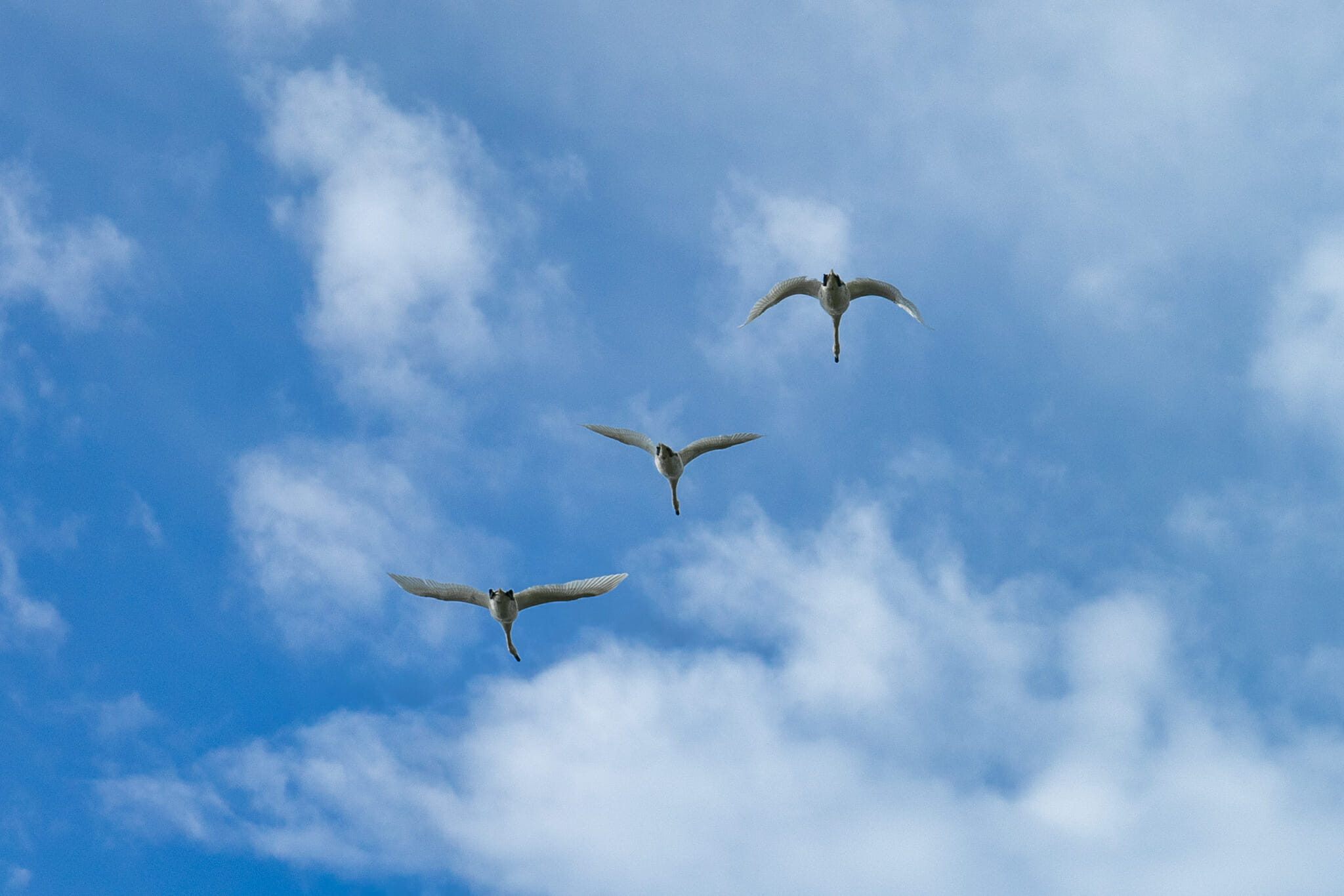
Standing close to a swan, you wouldn’t think that their size would allow them to be particularly good flyers. But as the perfect beings that they are, flying is of course not a problem. In fact, standing underneath a flock of swans as they pass over you is a magnificent experience. You hear them before you see them. Whoosh, whoosh, whoosh. The sound of their big wings is just one of their many majestic characteristics that leave you in awe and make you look up. If you are really lucky, as I was while taking the below picture, you are carrying your camera, the camera has a suitable lens mounted, and the shutter is set to a sufficiently fast speed. That rarely happens to me since my camera is usually in landscape photography mode, but in this case, everything aligned and I got one of my few sharp pictures of flying swans.

Last but not least: the swan heart image. I had been chasing this photo for almost as long as I have been chasing swans. Inspired by the town arms of the city that I work in, I wanted so badly to photograph two swans forming a heart with their long, beautiful necks. I had been close many times where I would see a swan couple drifting toward each other, only to break off at the last second or stick their necks into the water for food just at the crucial moment (I can’t count how many pictures I have of swans with their heads in the water).
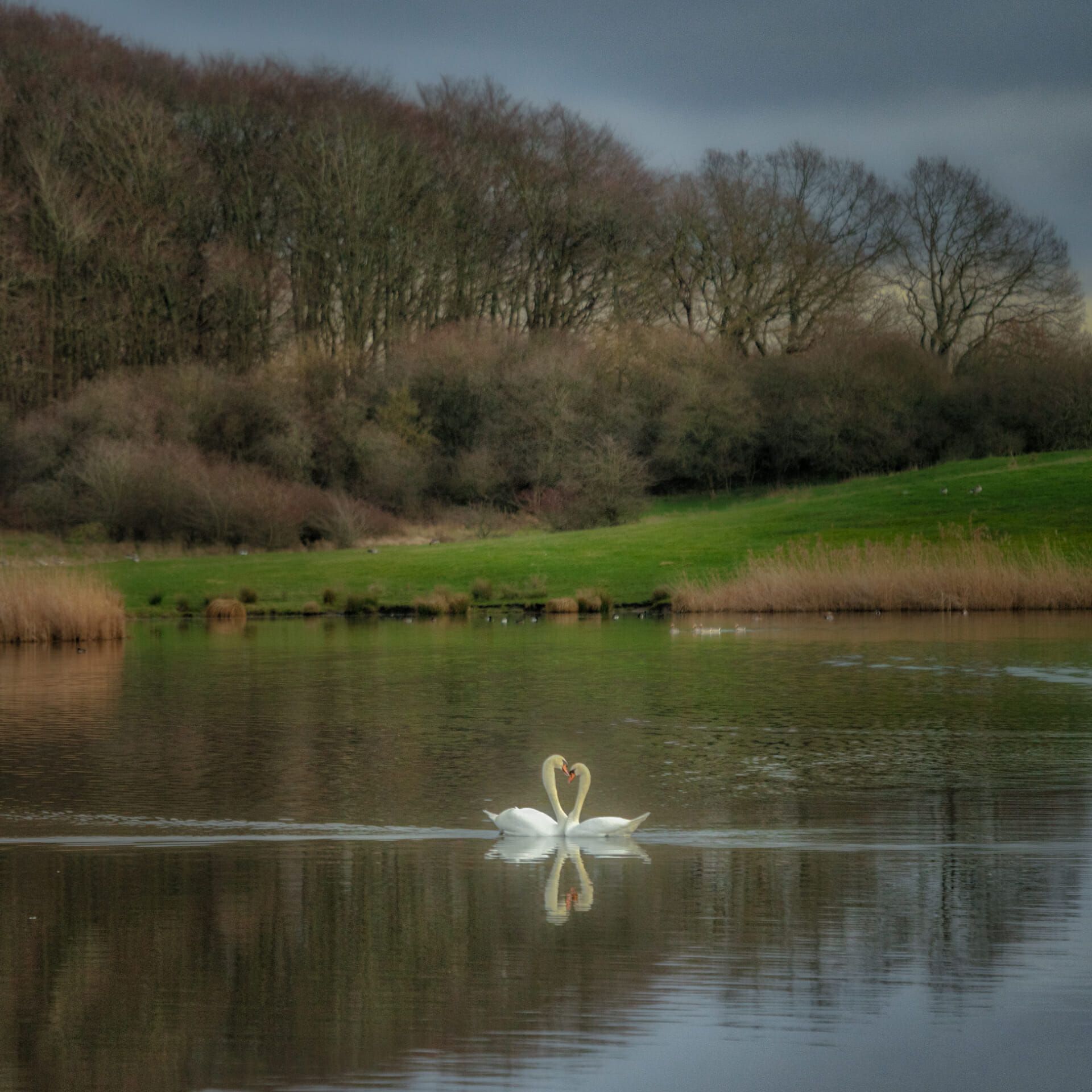
And then, finally this year, on Valentine’s Day no less, this happened. It was a magical moment. The swan on the left had just landed on the water after having been out flying for a while. My prejudice about gender roles tells me that it was the male. The other swan – the female – saw him land, and they immediately headed towards each other and met in this, not quite perfect, heart shape in the middle of the lake. They spent the next few seconds almost wrapping their necks around each other in a loving embrace. I was absolutely thrilled.

I have tons more swan pictures in my collection, but these are some of the highlights. Swans are a subject I never get tired of, and I find it almost impossible to walk past a swan without taking its picture. Other birds may be rarer or more interesting in many ways, but none are as beautiful and photogenic in all their various poses and moods.
Read More

Foxgloves in the Valley of the Wolves

Foxgloves in the Valley of the Wolves

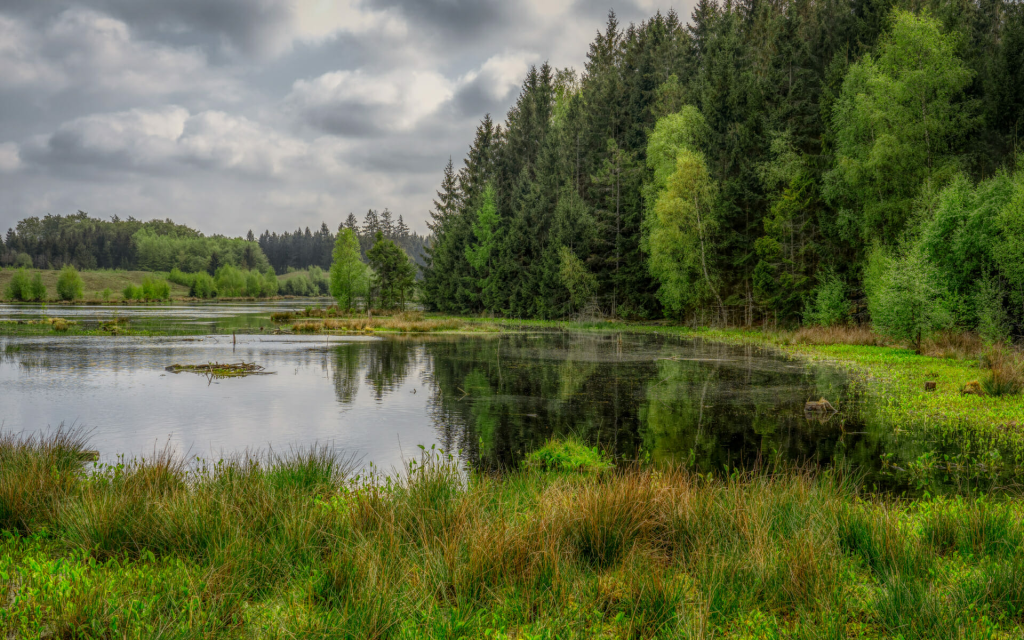
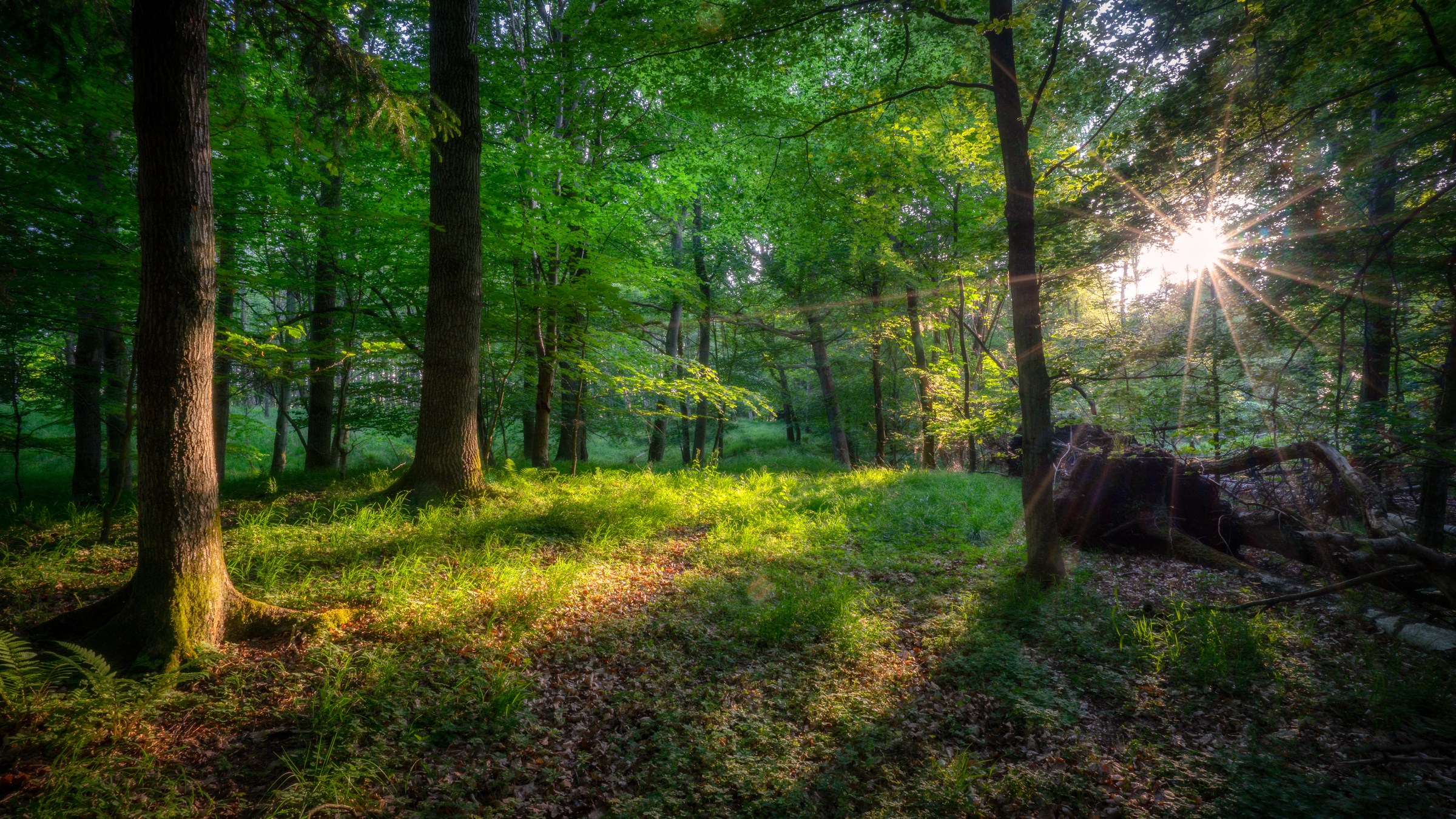
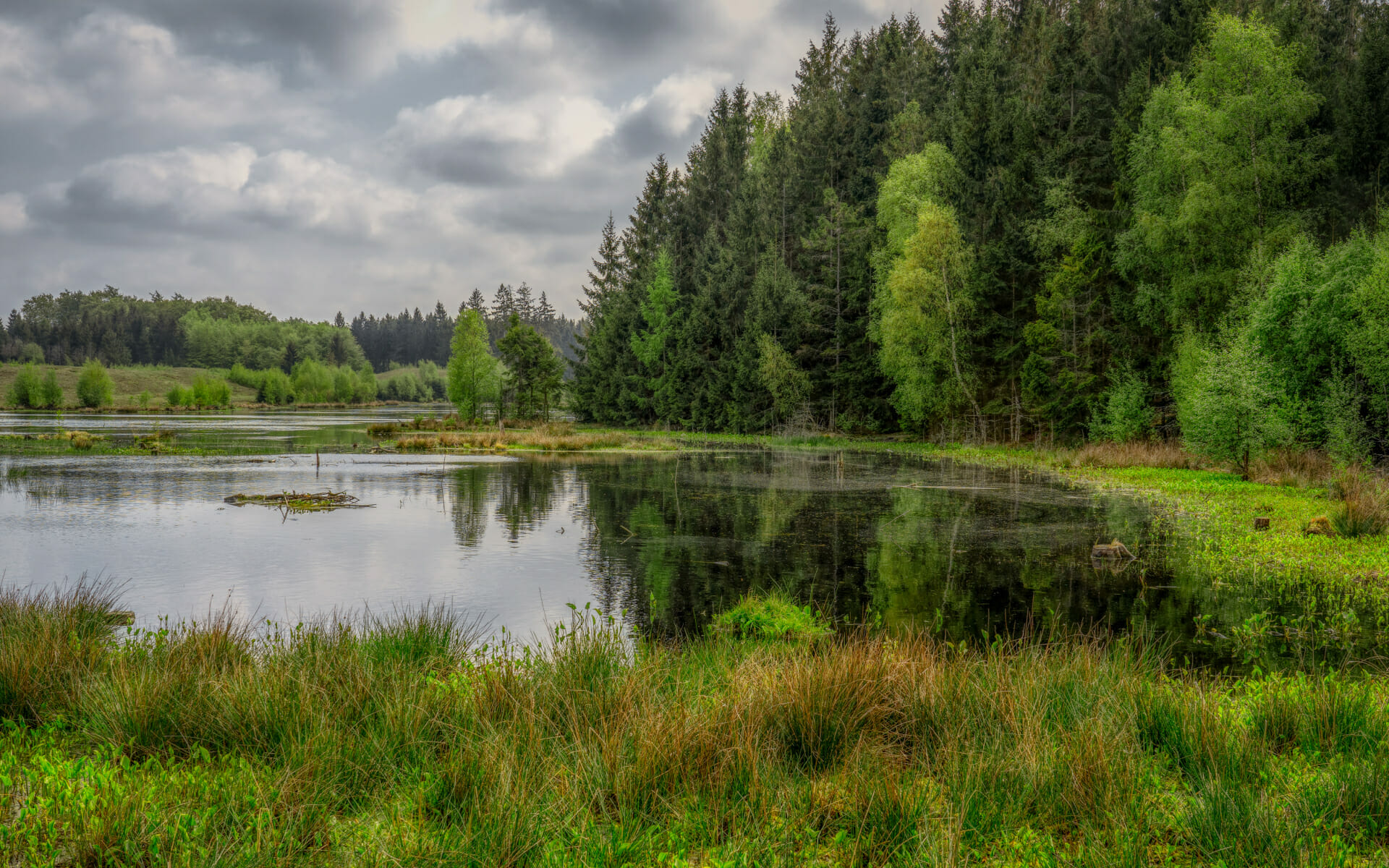
The other night I got on my bike and rode deep into the forest to do some shooting at an enclosure named Ulvedalen. Ulvedalen translates to Wolf Valley, which sounds dramatic, but there really are no wolves. I don’t Read more

Read More

I Have a Problem With Sunglasses

I Have a Problem With Sunglasses

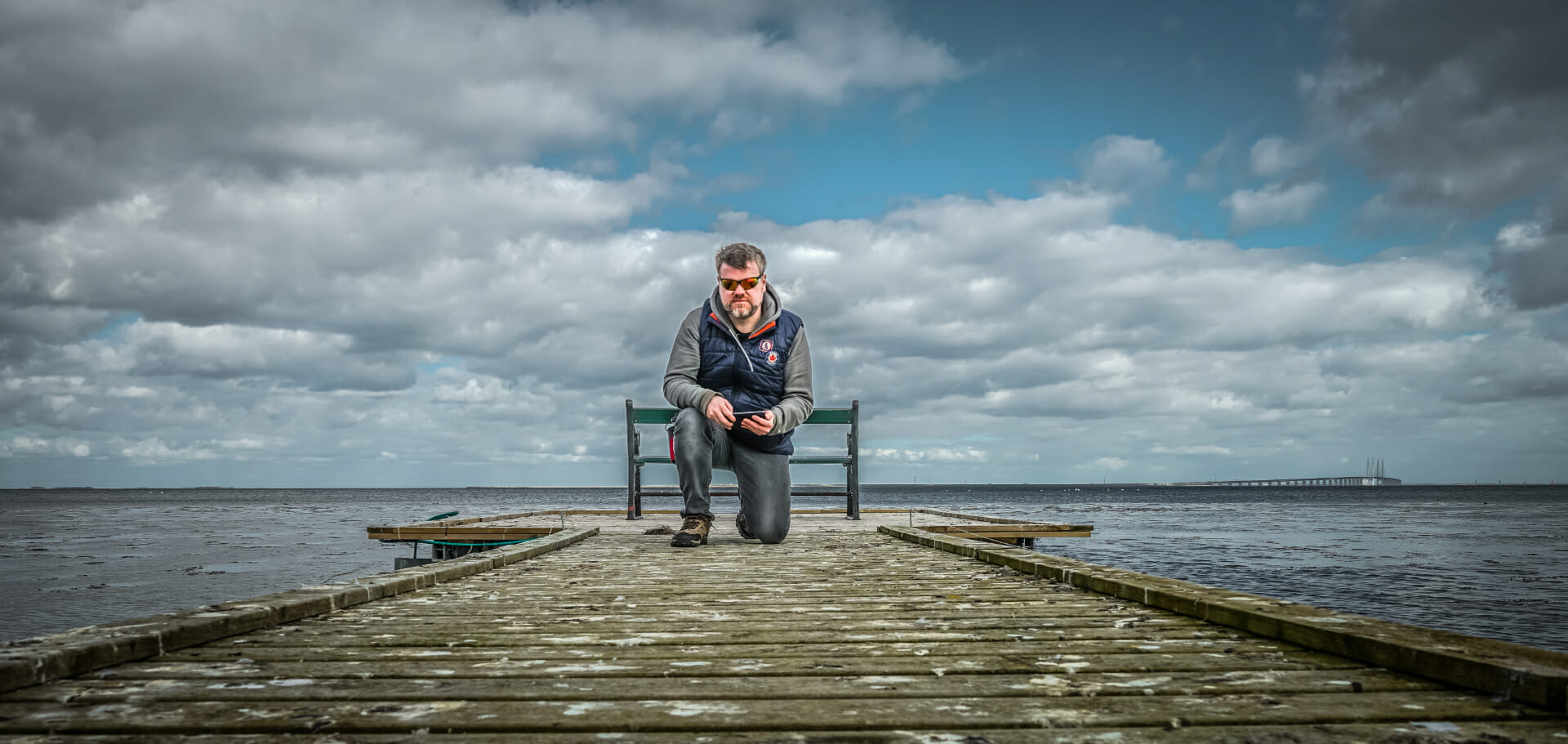
I love wearing sunglasses. One of the main reasons I changed to contact lenses years and years ago was that I wanted to wear sunglasses. My eyes are quite light sensitive. It doesn’t take much for me to squint and feel overwhelmed with light. Plus, there is no denying it: sunglasses just look cool.

Another reason I love sunglasses is that they make the world look so much better. The warm golden shade that everything gets when you look through your sunglasses is beautiful. When I post-process my photos I very often make them warmer in order to make the landscape look more like it does through sunglasses. People who don’t wear sunglasses probably wonder what on earth I’m doing. Well, that’s what I’m doing.

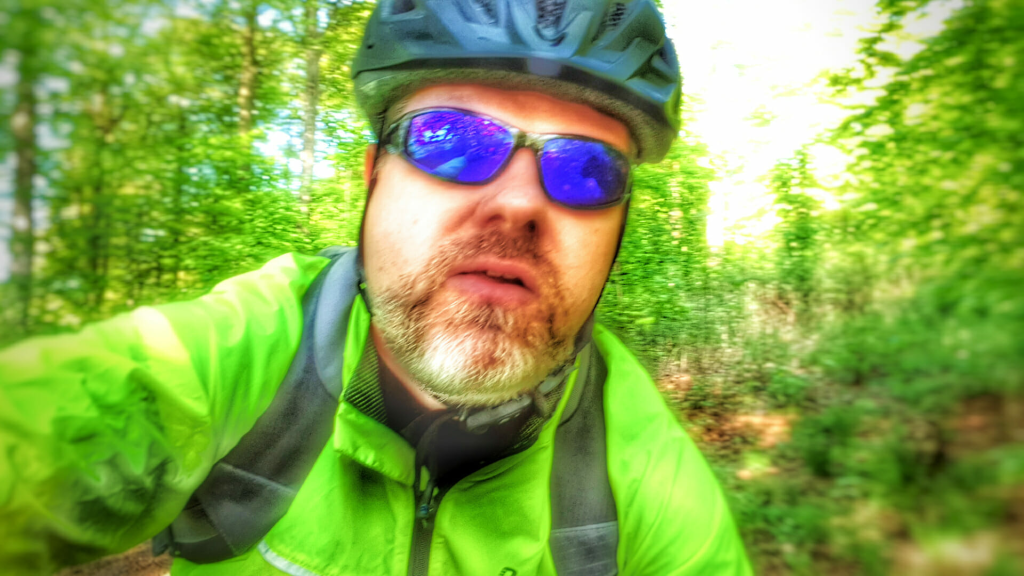
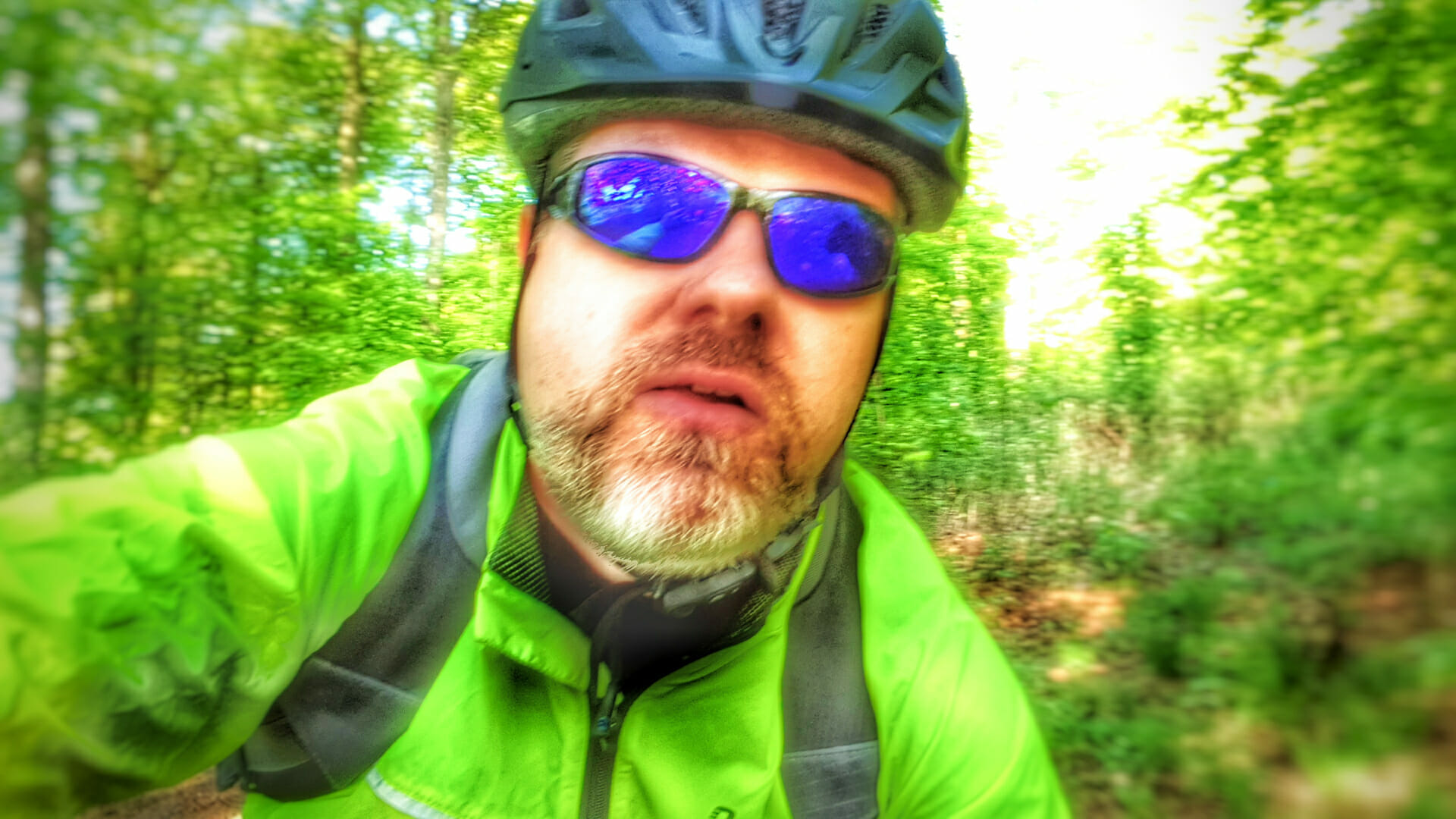
A recent selfie with me wearing sunglasses while riding my bike.

But perhaps my most important reason I have for wearing sunglasses is that they protect my eyes from dust and sand. Like I mentioned, I wear contact lenses. Rigid Gas Permeable Contact Lenses, the kind you wear for 1-2 years before replacing them. As everyone knows who uses this type of contact lenses, getting something in your eye while wearing them is just a teeny tad more desirable than stepping on LEGO’s with bare feet (nothing beats that). It hurts so much you want to rip your eyeball out.

The problem I have with sunglasses is two-fold: 1) I break them, and 2) I lose them. This year alone I broke or lost an average of one pair per month so far. This often happens while I’m out taking pictures. When I stop to set up my camera to shoot an image, I take my sunglasses off. You can’t look into your viewfinder wearing sunglasses. And since I need both hands to adjust the settings and tripod, I stick the sunglasses in a pocket. Then I forget about them and move along. Then when I remember them and want to put them back on, they are no longer in my pocket. Even if I backtrack and try to find them, I never do.

Because I lose so many sunglasses, I can’t invest in the more expensive brands. I have always just bought the cheapest ones I could find at the grocery store or at gas stations. This leads to the second problem: breaking them. Cheap sunglasses are not even worth the cheap price they are sold for. They break just from being put on my big head a few times, or from being dropped on the ground, even if the ground is soft.

A few weeks ago the final straw broke the camel’s back. I was out on a little photo trip on my bicycle. After only about 15 minutes, I stopped to check Google Maps on my cell phone. I took my brand new, cheap pair of sunglasses off so I could see the screen. Of course, I then dropped them on the forest path… and one of the lenses fell out. I managed to put it back in, but it was only a matter of time. Before I reached my destination deep in the woods, the lens fell out again, and this time it was impossible to reattach. The frame was broken.

Now, this particular day was one of the windiest days of the season. Dust and sand was whirling around in the air. It wasn’t long before some of it got in my unprotected eye. It was painful as hell, but I braved through it and did my photo shooting of an area I’d been wanting to go to for months. However, heading home though the forest turned into a nightmare. First the chain fell off my bike, and I had to put it back on using only one eye. Then I got something in my other eye. I was blinded and in horrible pain. At one point I stopped and found my little spare contact lens suction cup that I always carry around for emergencies like this, only I’d never attempted to take out a contact lens in the middle of the forest before. I had about a 75% chance of dropping the contact lens on the path, which would have sealed its fate, but miraculously I managed to get it wiped off a little bit with my finger and put it back in my eye. It didn’t help a whole lot. My eye was already red and swollen. But it was enough to get me the rest of the way home where, in a – for me – rare fit of rage, I hurled my broken pair of sunglasses on the table and swore I’d never buy cheap crap like that again.

I managed to capture this image on my ill-fated excursion. While I’m pretty happy with it, my images from that day, like my general fortune, left a bit to be desired.

As a consequence I went online to see if I could find some sunglasses that didn’t cost a fortune and were better quality than what the grocery stores have to offer. My search was a success. Excited to have found a solution to at least one of my problems, I ordered four pairs – some with a reading area, some for driving during the day, some for driving at night, and some for riding my bike.

When they arrived after only a couple of days, they did indeed seem like they were quite a bit sturdier than my usual sunglasses, which means I may have solved the problem of always breaking my sunglasses. As for the losing my sunglasses part, well, I did already lose two of the four pairs in the 1½ months that have passed since I bought them, so there is some work left to be done in that department. But I am now working tirelessly to find a solution to it. Most recently, I got a little case that I can attach to my belt. If I can get used to putting my sunglasses in that case while I take photos out in the woods – and zip the zipper – there is a chance I can reduce my consumption of sunglasses by a significant number. We shall see.

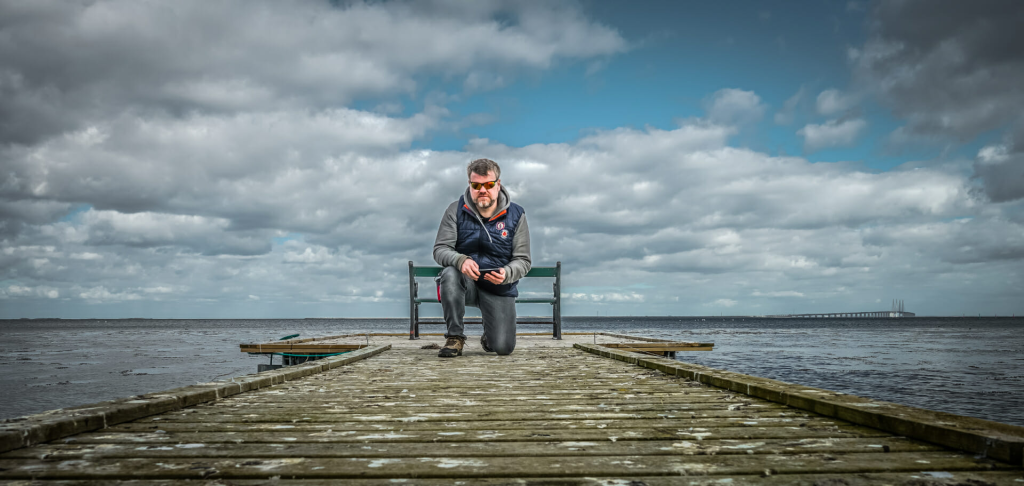
Perhaps my favorite picture of myself wearing sunglasses. It’s a few years old, so the sunglasses on my head are long gone… probably lost in a forest somewhere, where they will remain until the end of time.

Overwhelmed by progress and abandonment

Overwhelmed by progress and abandonment

Remember this image?

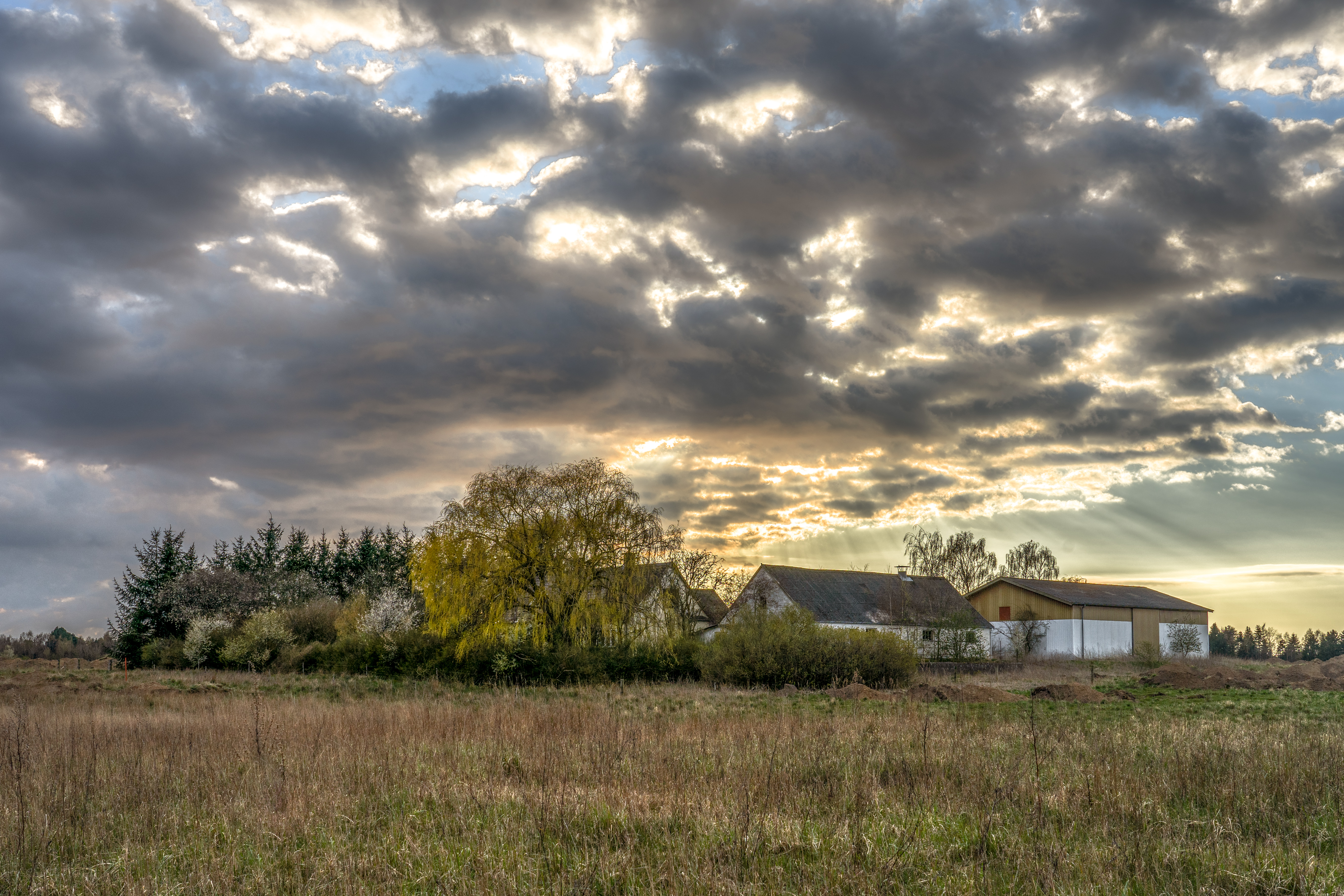
Probably not, but I posted it in the fall after roaming one of my favorite local areas, a piece of beautiful open land with tall grass, scattered trees, bushes and ponds. I have seen rabbits there, and herons. I have walked it in a foot of mud and snow and when the ground split in zig-zag cracks due to drought.

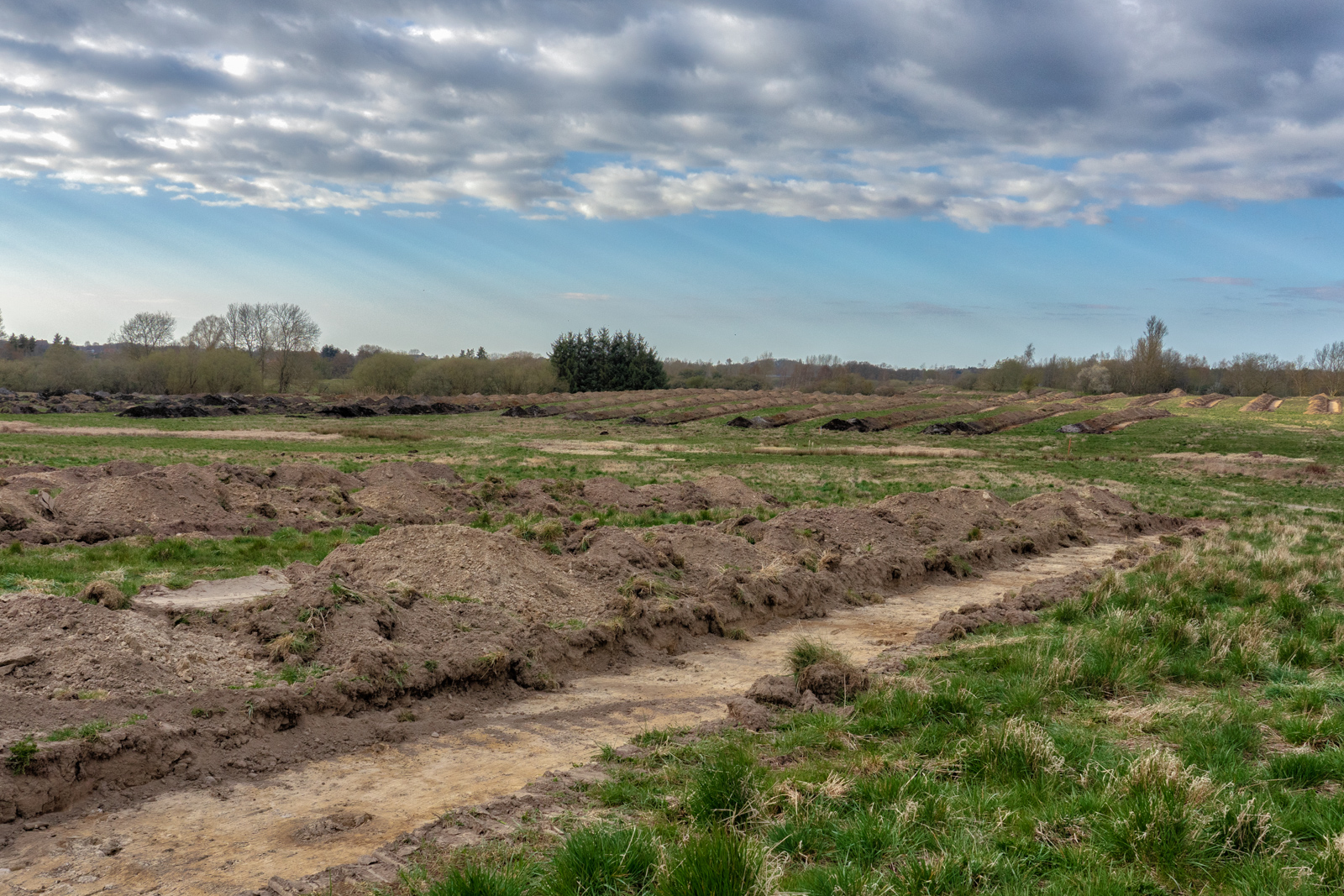
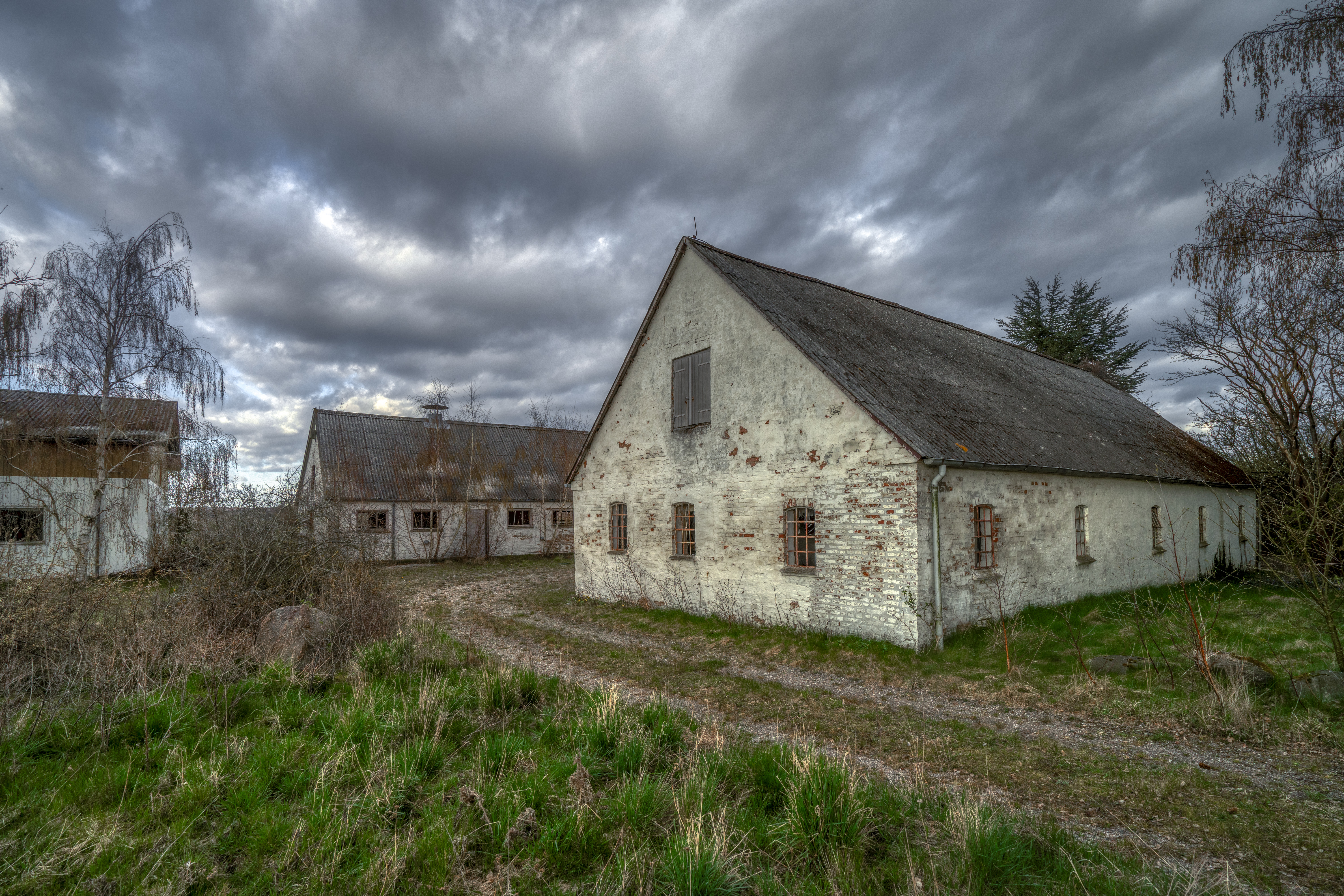
That’s all over now. Today it looks like this:

The land is now torn apart by hundreds of dirt piles and ditches like these. Progress is coming. In a year’s time this will be a new part of the city, a new residential area for families with children. The rabbits and herons will be displaced and die. The rare piece of open, non-cultivated land will be but a memory.

I just realized all this the other day as I happily walked out there to see if I could put a new spin on this familiar territory with my camera. Sure, I’d seen that they were building a few houses near the road, but I never knew they were about to cover the entire 10 hectares in pavement, bricks, and hedges.

The sight of the destruction of this beautiful area almost made me nauseous. But it wasn’t long before this new realization turned into an opportunity. Making my way across and around the newly dug ditches had led me close to the old farm house that struts in the middle of the area. I had always steered in a long circle around the farm house as I didn’t want to get yelled at by whoever inhabited the place. Despite the lack of fences and crops, the land I was walking on may very well have been theirs.

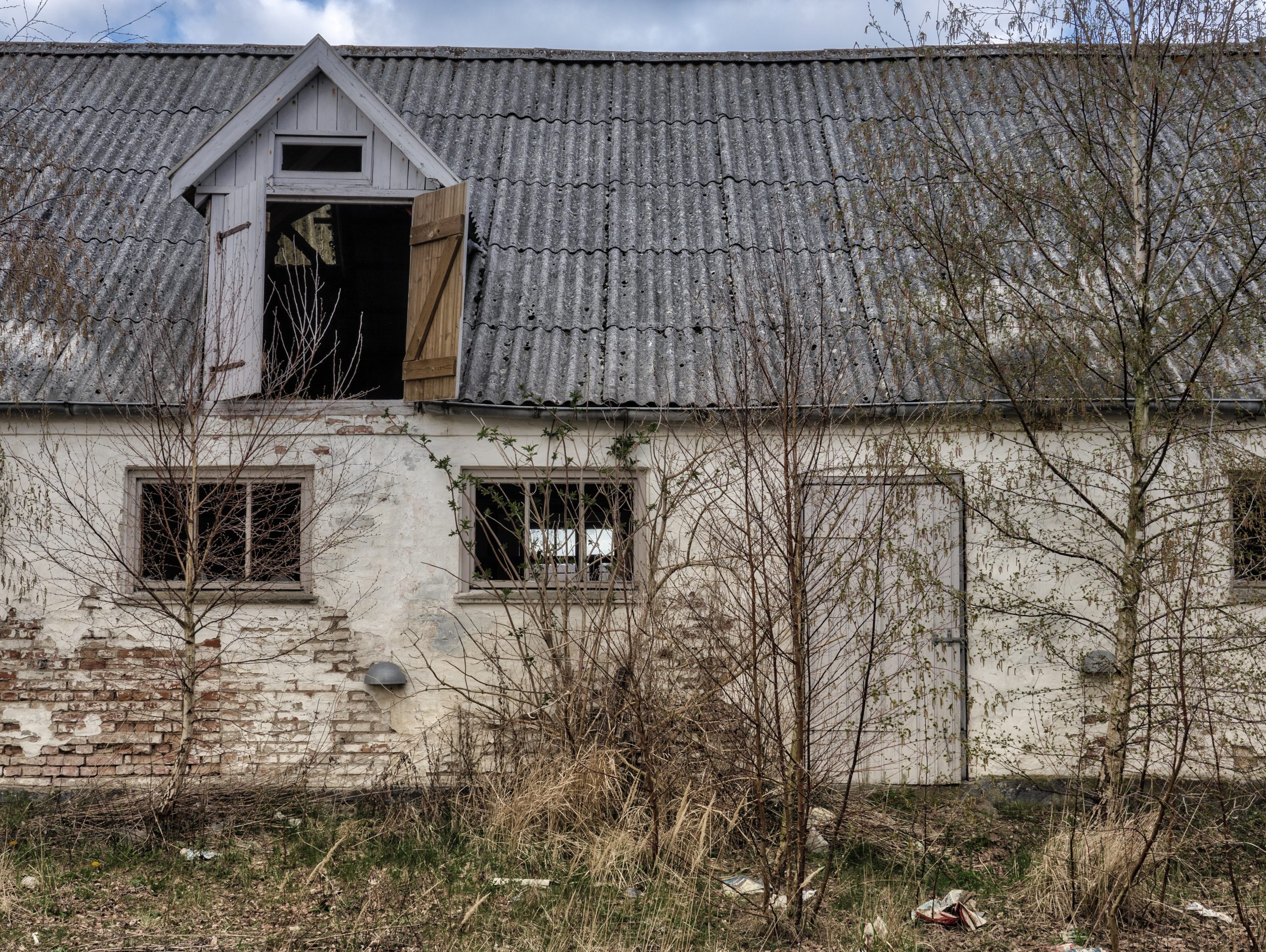
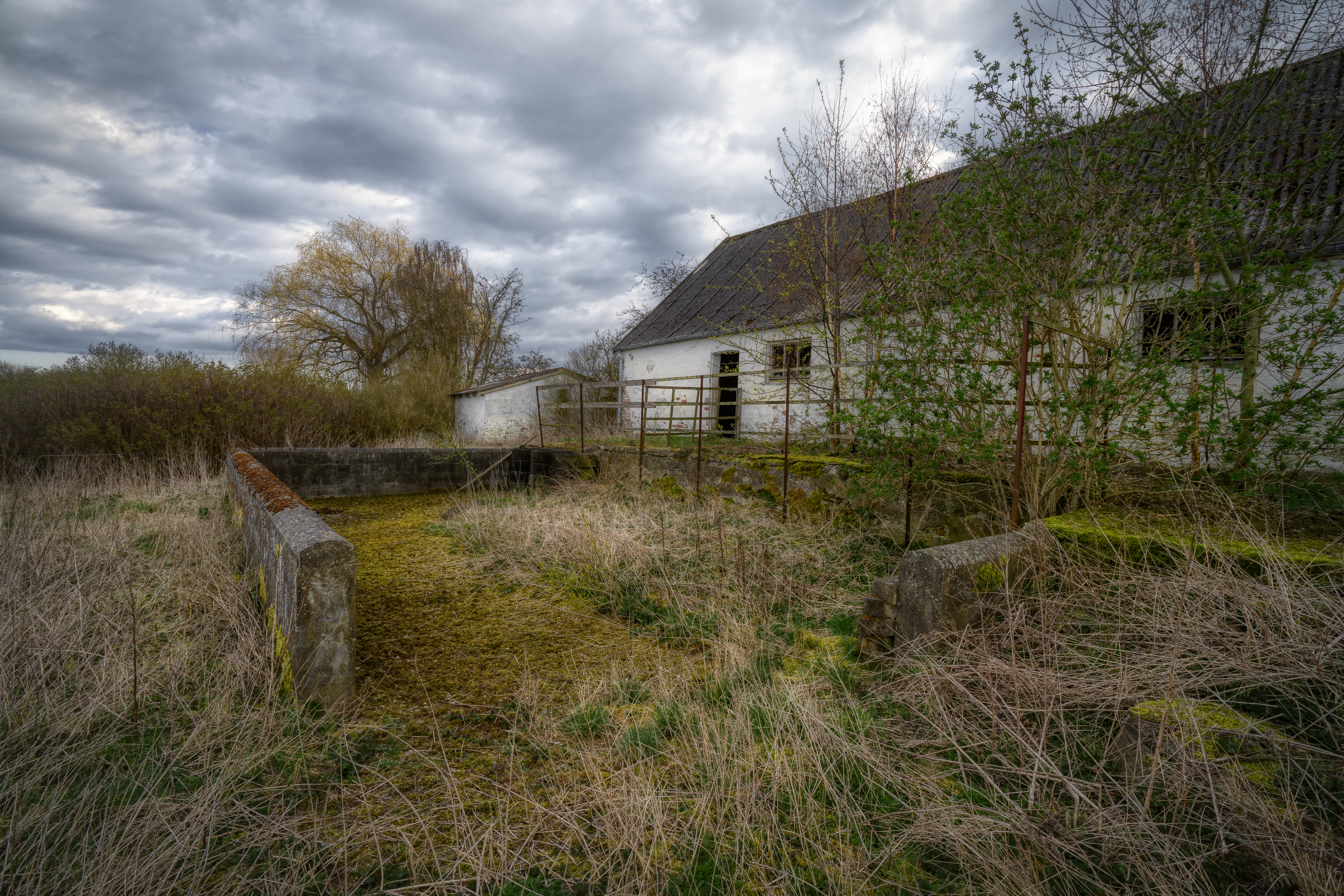
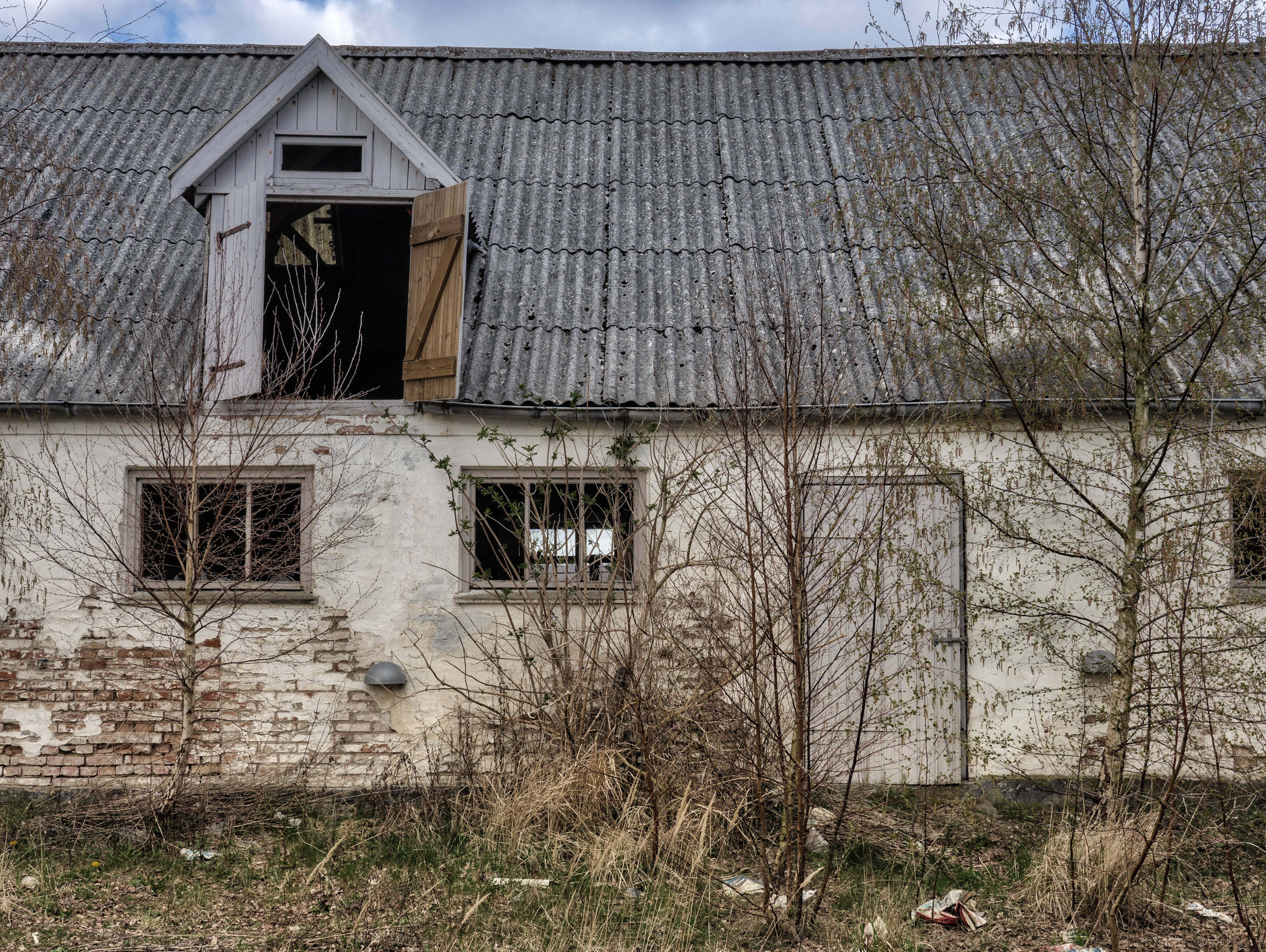
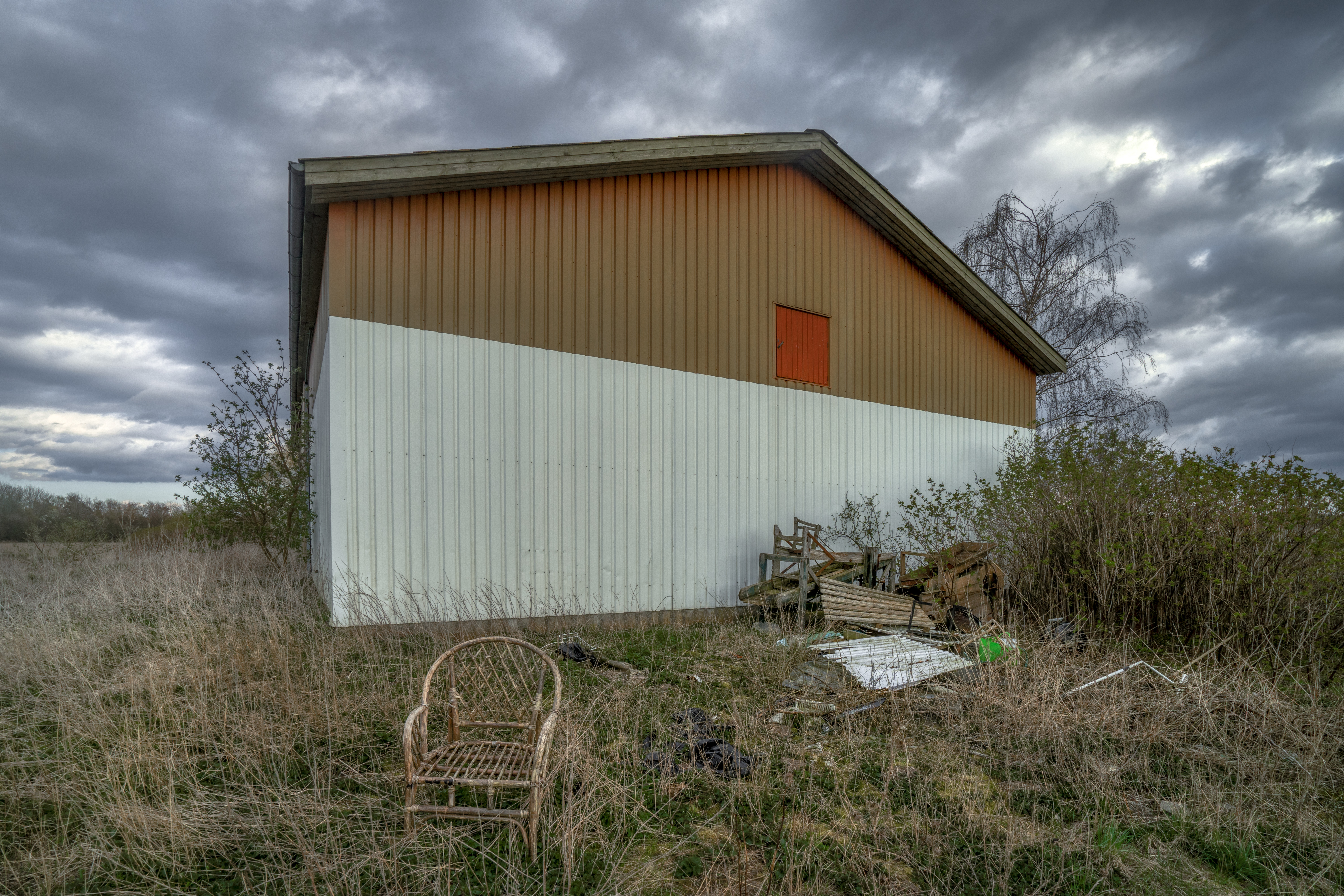
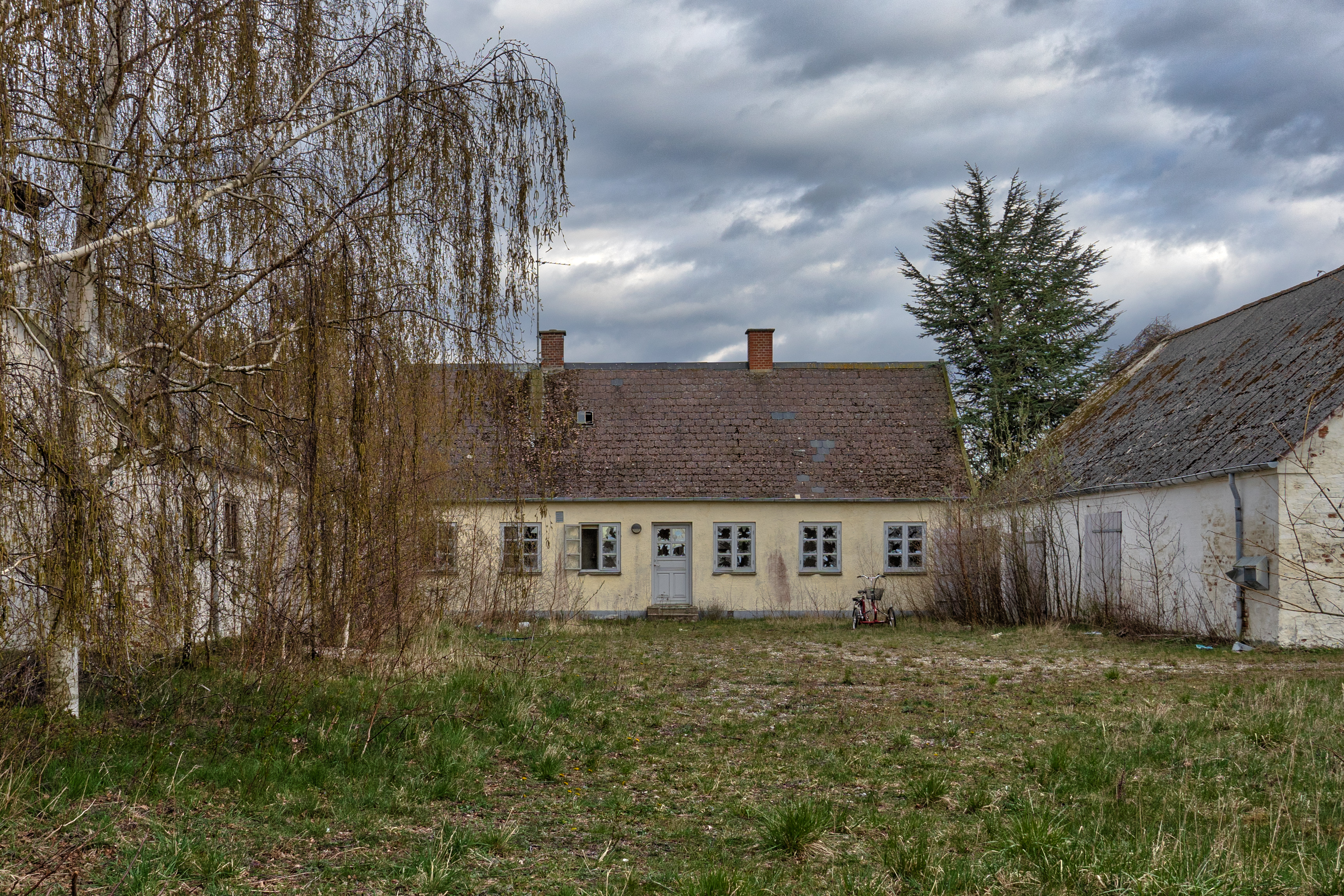
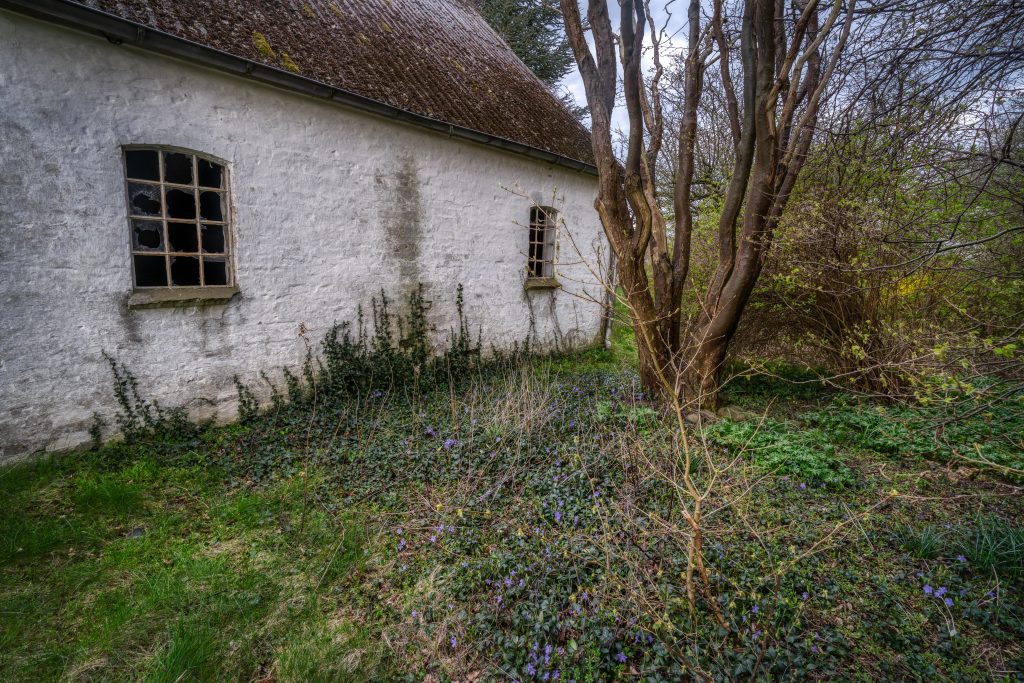
But now, having ended up almost in their backyard, something seemed off about the place. I saw broken windows. I saw weeds everywhere. I saw junk randomly tossed on the ground. Holy cow, the the whole thing was abandoned!

Now, if you are not a photographer yourself, you don’t know that the word “abandoned” is sweet music in any photographer’s ears. Few things are as photogenic as abandoned locations that have been taken over by nature. There is just something about the contrast between human activity and the unrelenting nature that makes for good images.

Fearing a wrecking crew might show up at any minute to level the house, I unfolded my tripod and got to work. This could very well be my only chance to document the old buildings and the soul whose presence I could sense so clearly.

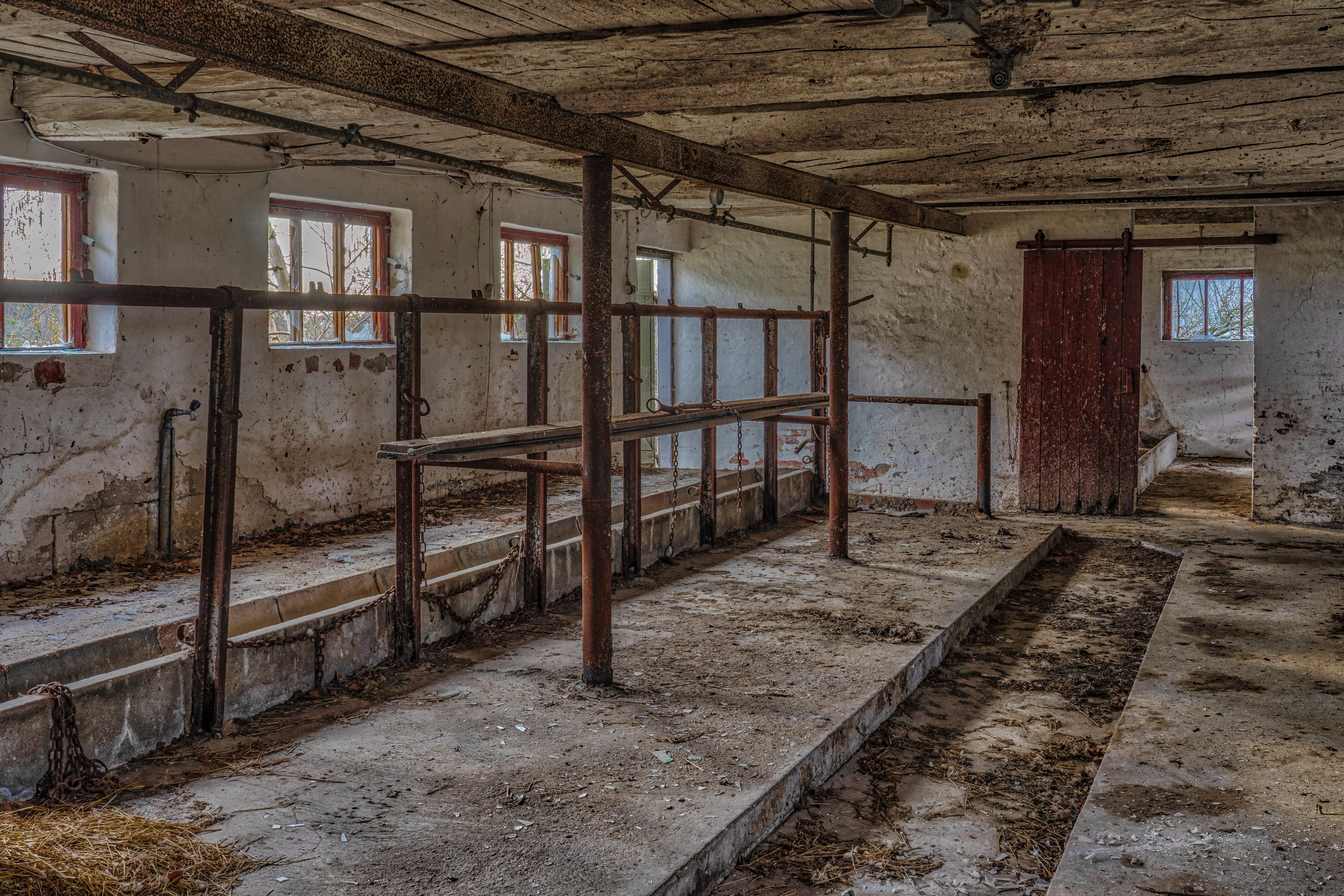
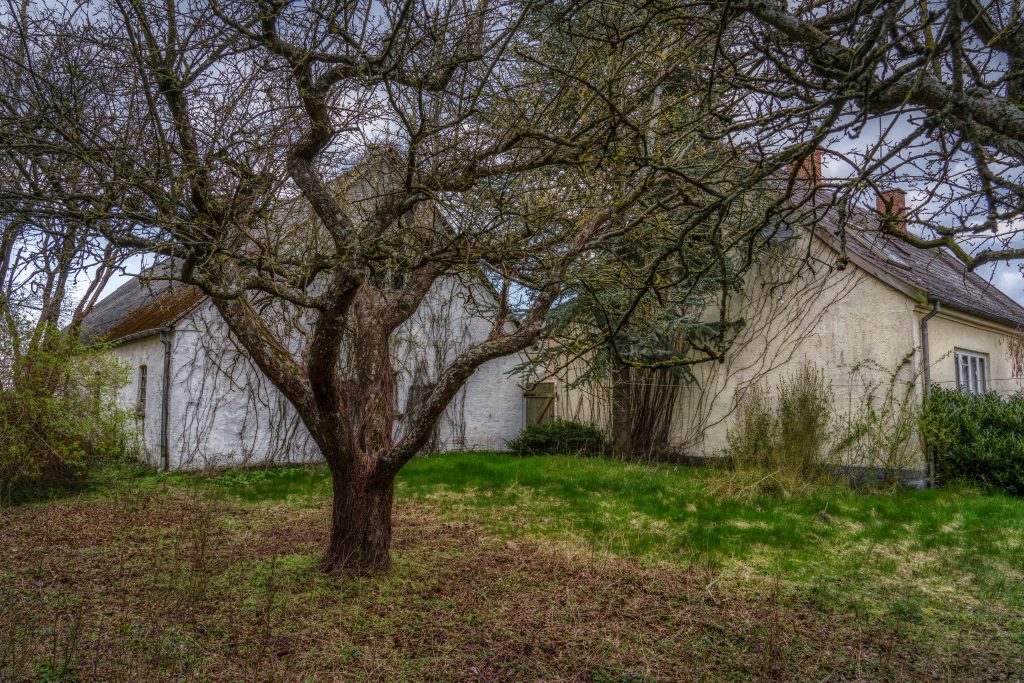
As I circled the house, it became more and more obvious that the farm had been in a state of abandonment and decay for years, possibly a decade or more. The walls were crumpling, trees were growing too close to the buildings. The inside of the stable showed no signs of animals having been present in ages.

One time, however, I stopped in my tracks. A tricycle – the kind that old people use – was parked in the front yard. Was someone here after all? But no, at closer inspection I could see that there was no air in the tires. It had been sitting there since whoever lived in the house left for the last time.

Maybe it was the tricycle, or maybe it was entering the below little backyard that suddenly made me envision life as it may have played out when it still existed here, and what led to its demise. Children running around, eventually growing older, moving away, uninterested in carrying on this farm that may have been in the family for generations. The old farmer and his wife, working the fields and livestock, until one day one of them dropped and could no longer work, leaving the other one lost and with no choice but to move into a retirement home for whatever time was left.

The sun was starting to set, and it was time for me to leave my new discovery behind. As I walked home, the passage of time felt more present than ever before. In less than a week I turn 50 years old. If the speed with which the last 20 years have gone by is any indication – and I fear that it is – the time when whatever traces I’m leaving behind start to fade is in sight. It may not be in shape of a farm, but it will probably be in the shape of what I have created on websites such as this one. And all these images, and thousands more, that no one has ever seen and no one ever will.

But that’s okay. When I got home and told my wife what I had experienced, she said something to the effect of, “Before our house was built, this area was someone else’s untouched ground, and they were probably pretty unhappy that new houses were being built.”

Her words stuck in my mind. The world is constantly changing. Generations follow generations, and the current generations have no say about the future. We have to accept that the world is only on loan to us. And we just have to make the best of it while we can.

The old farm house will probably be torn down one of these days. The new neighborhood will rise from the ground. I will find new places to shoot my images that few people will ever see. And one day when I’m gone, a server will be turned off and the images, too, will be gone forever.

But somewhere in the world, another middle-aged, overweight amateur photographer will leave his house and go out to shoot his pictures.

Read More

Blood, Sweat, and Forest Photography

Blood, Sweat, and Forest Photography

Considering how few people actually see my photography – most of my images are only ever seen by me – I take it very seriously. I am finding my niche more and more in Danish landscape, and forest areas Read more

Read More

Weekend getaway to the North Pole

Weekend getaway to the North Pole

They say that once every few thousand years, the magnetic poles flip, reversing north and south. What the scientists missed was that the flip took place last weekend, and for a brief period during the shift, positioned the North Pole  in Odsherred, Denmark.

As it happened, Odsherred was the part of Denmark where, that very weekend, my wife and I had decided to spend a couple of days away from the humdrum of our every day life and see something new. We ordered the trip a while back thinking the middle of March would be, if not full-blown spring, then at least noticeable more pleasant than the cold winter.

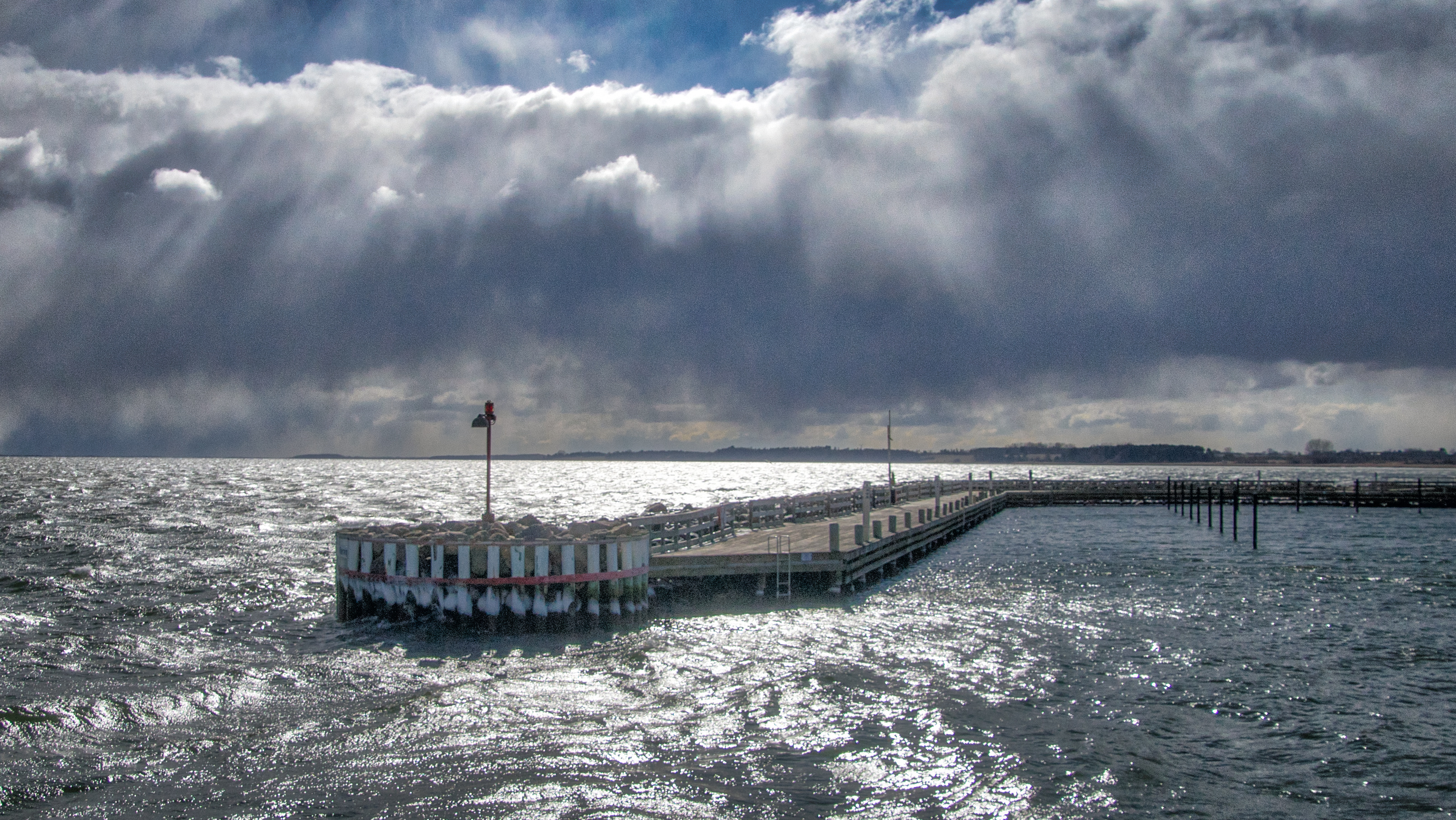
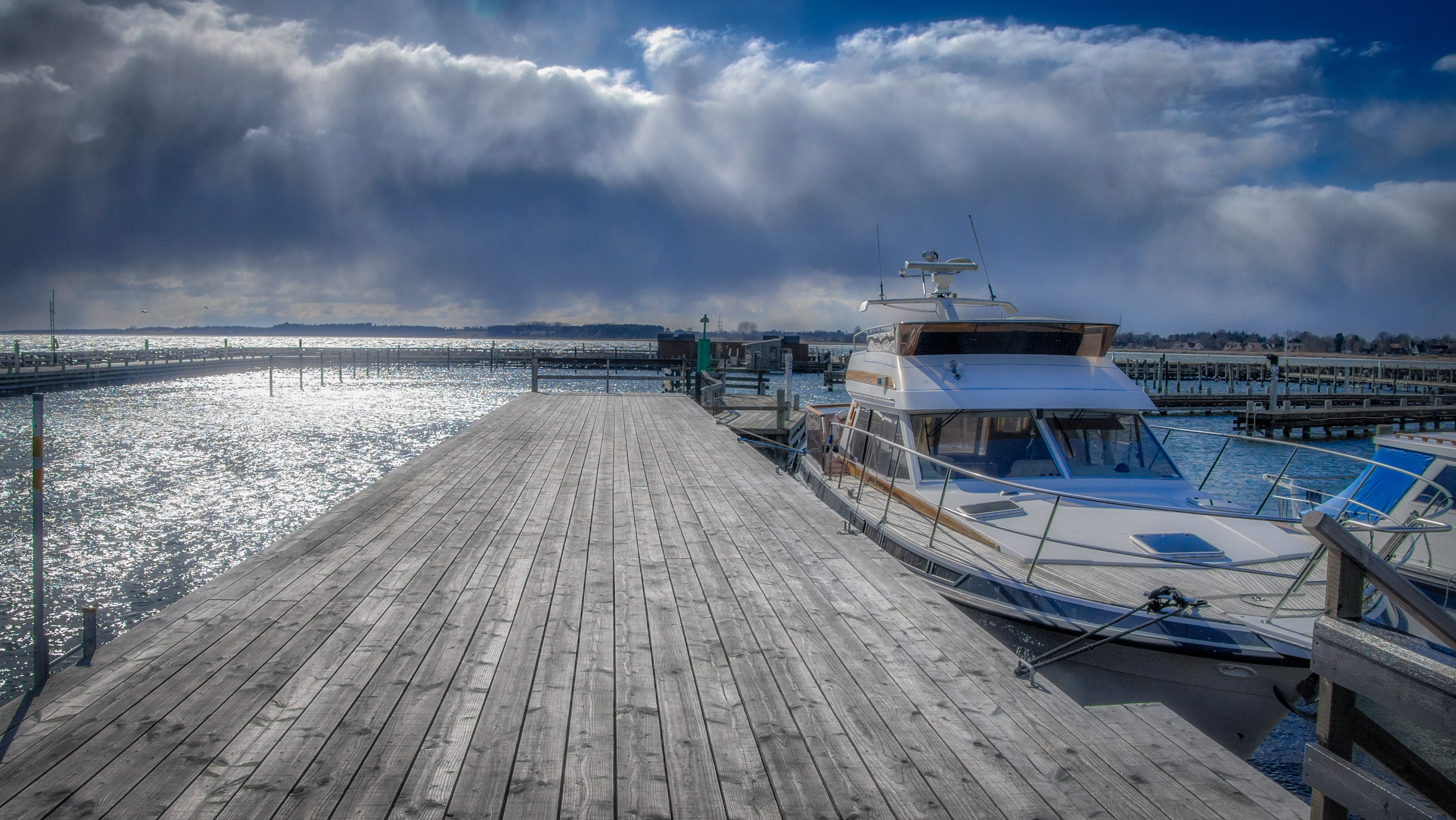
How wrong we were. Even on our way over there during a stop at a small marina, we got a preview of what was to come. The marina was protected from the wind by a tall ridge, but plenty of cold air coming straight out of Siberia reached us to make us shiver and start worrying a bit about what we’d gotten ourselves into.

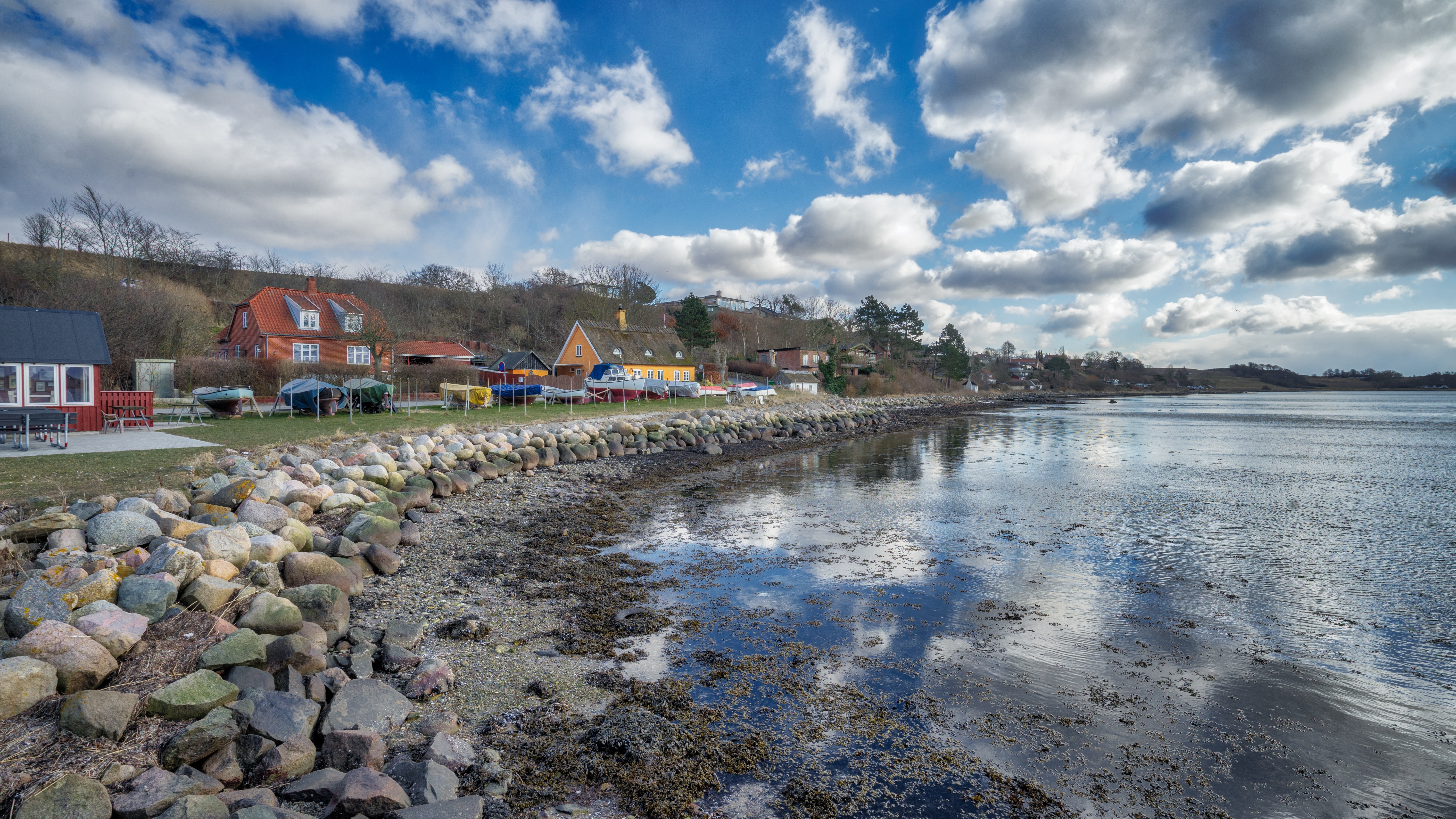
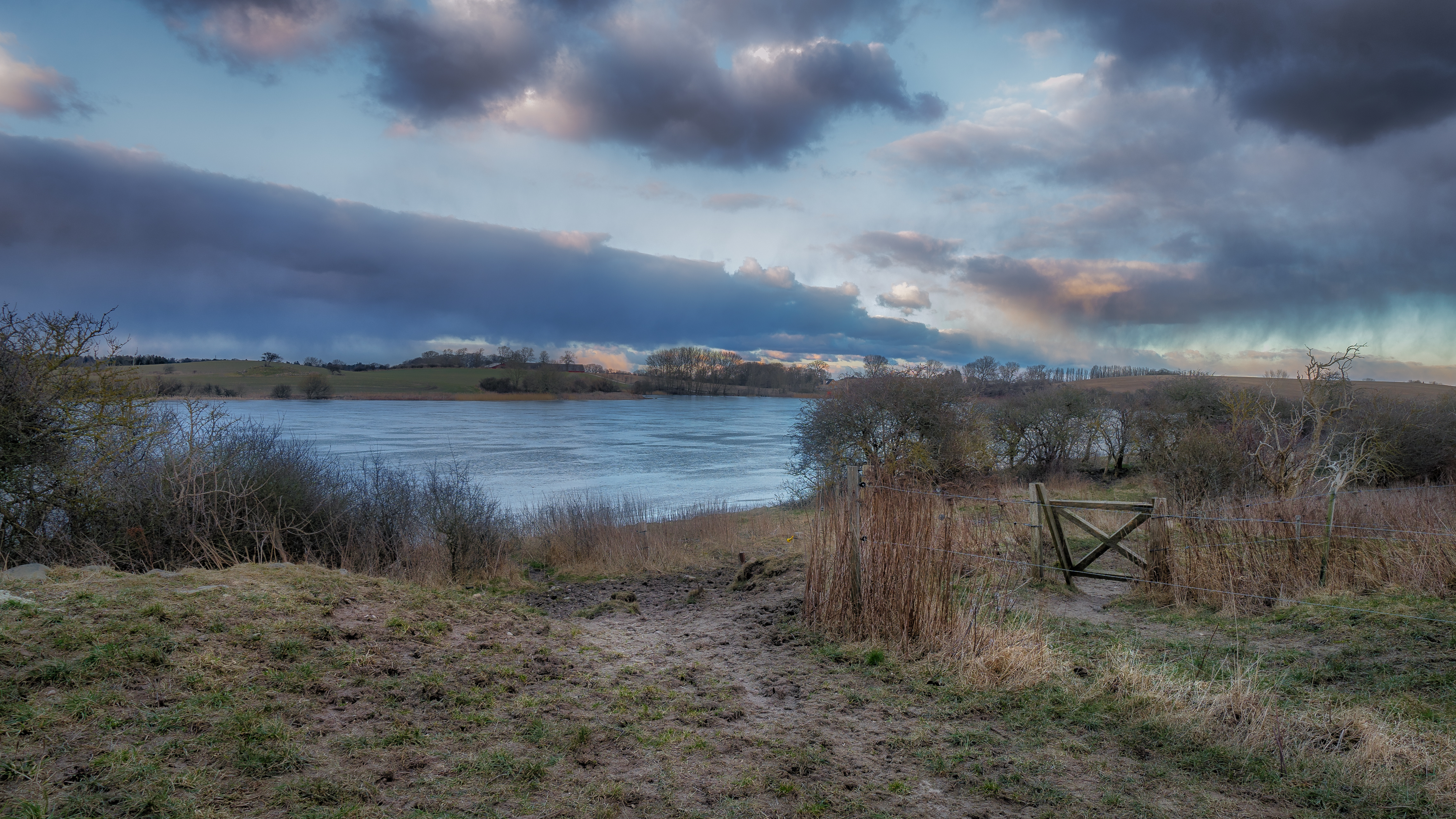
Still, I managed to get off a few shots of the beach area, in pretty difficult middle-of-the-day-light, including this nice one showing cloud reflections in the reasonably calm water.That same evening after checking in to our hotel, we went for a walk in the area near the hotel. The sun was low in the sky and revealed some beautiful scenery with a peaceful lake surrounded by animal pastures. There were no animals, however, as they – or their owners – had realized what perhaps we should have realized ourselves: it was too damn cold to be outside. The photography suffered as a result. There wasn’t time for much location scouting, so I wasn’t quite happy with the images of what, at first glance, had looked like a slam dunk. This one is pretty nice though, but nothing spectacular.

The next day was our only full day in Odsherred. There were several locations I wanted to seek out, most importantly the long strip of land that protrudes from the north-west corner of Zealand and ends in the middle of the ocean. About halfway to the tip, we spotted a parking lot at a beach and decided to get out and take a look.

That’s when it happened. Stepping out of the car and down to the beach, the realization that today wasn’t just cold cold – today was excruciatingly cold, as in dangerously cold, as in physically painful cold – hit.

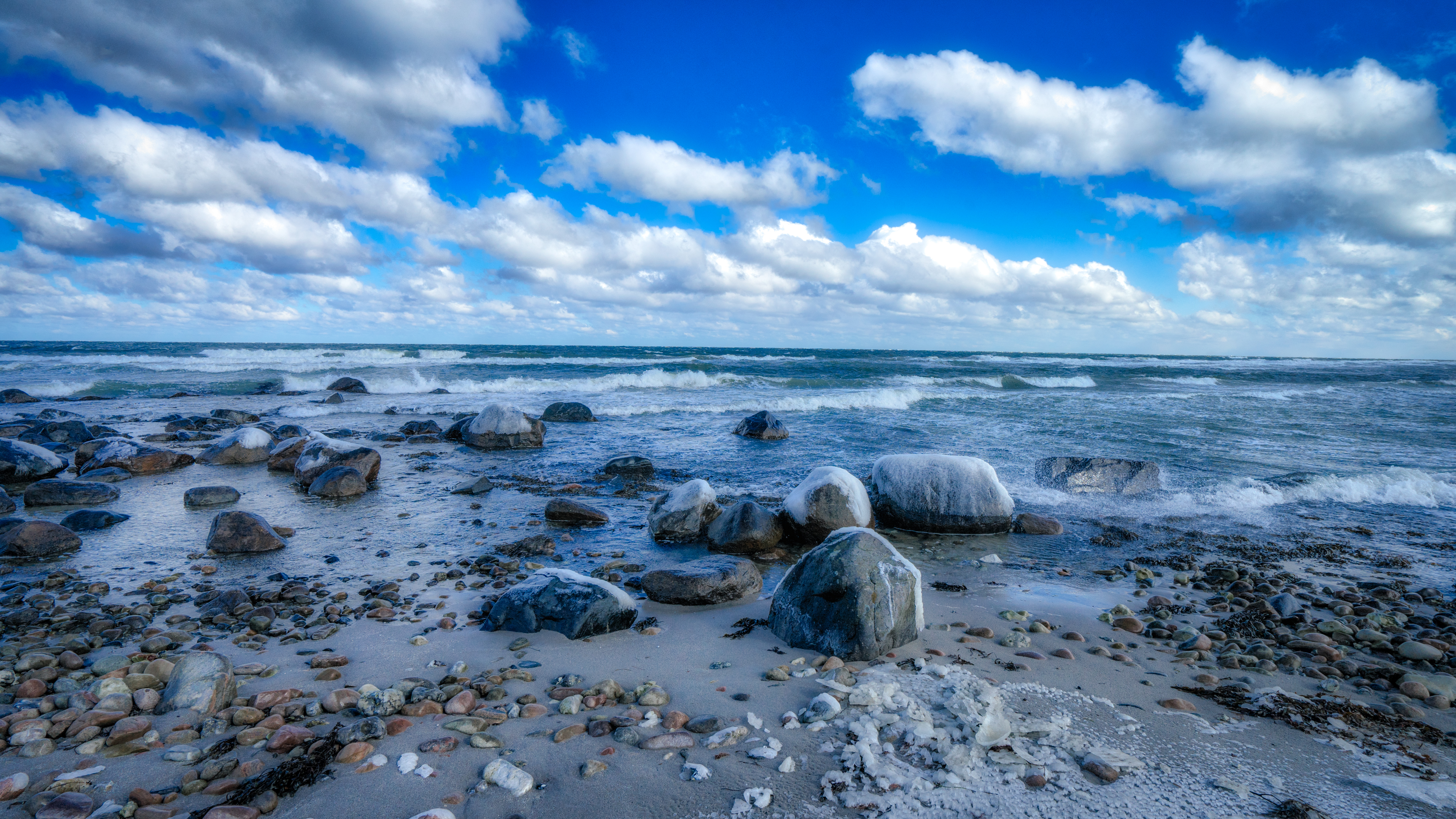
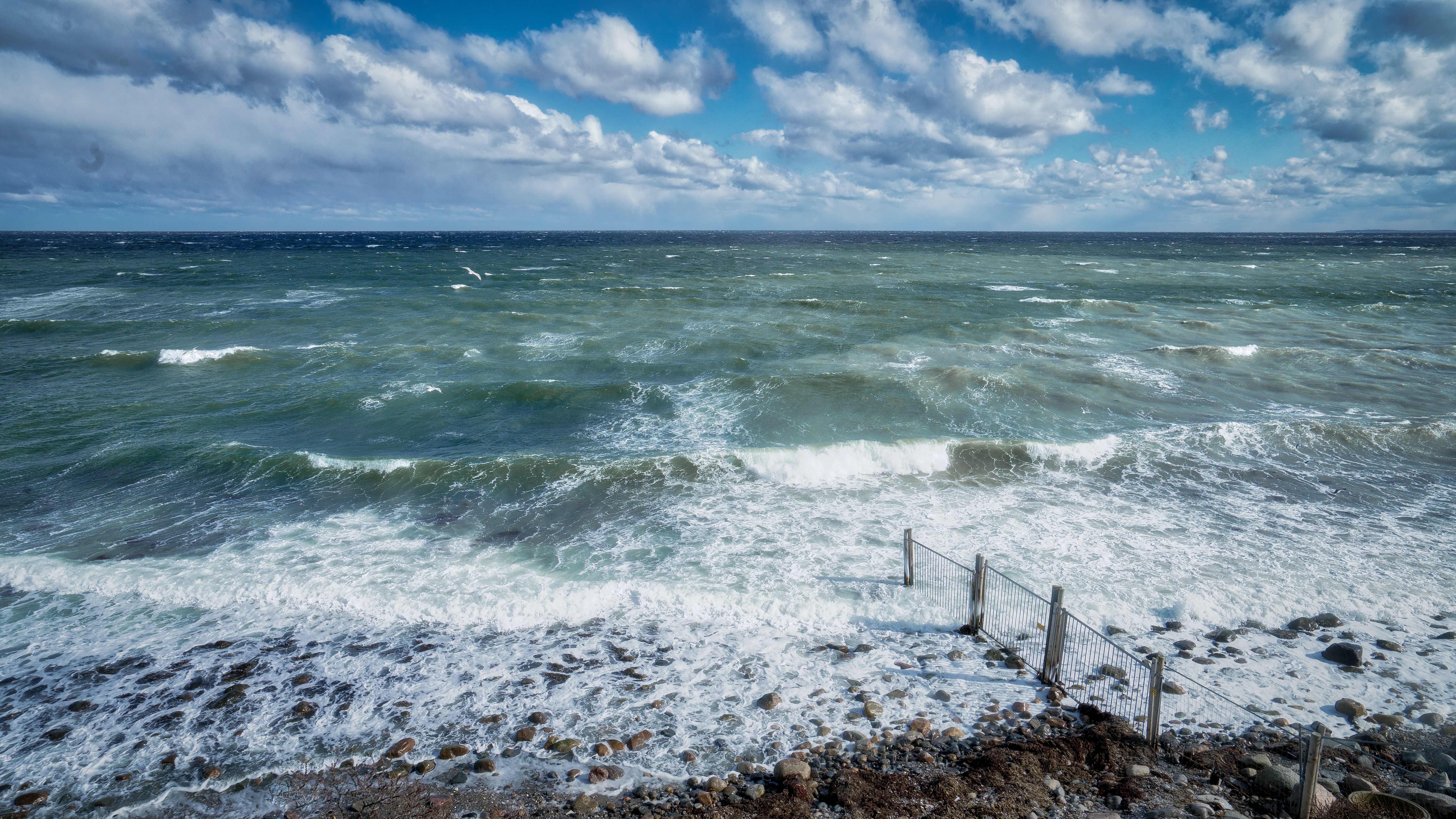
It was the wind. It came in from the north-east. 20-30 kilometers an hour, multiplying the -5 degrees Celsius by 4-5 times. It cut through my knitted hat like a knife and into my skull, instantly setting off a brutal headache. But still I persisted. The scenery was too spectacular to miss. Wave after wave came rolling in, crashing against rocks loosely spread along the beach, white clouds drifting across the blue sky. I ran back and forth, shooting one image after another, the freezing wind mutilating my face and hands like an ice-shooting blowtorch.

It paid off. The best image of the entire weekend was shot here on this North Pole beach. Several others were almost as good.

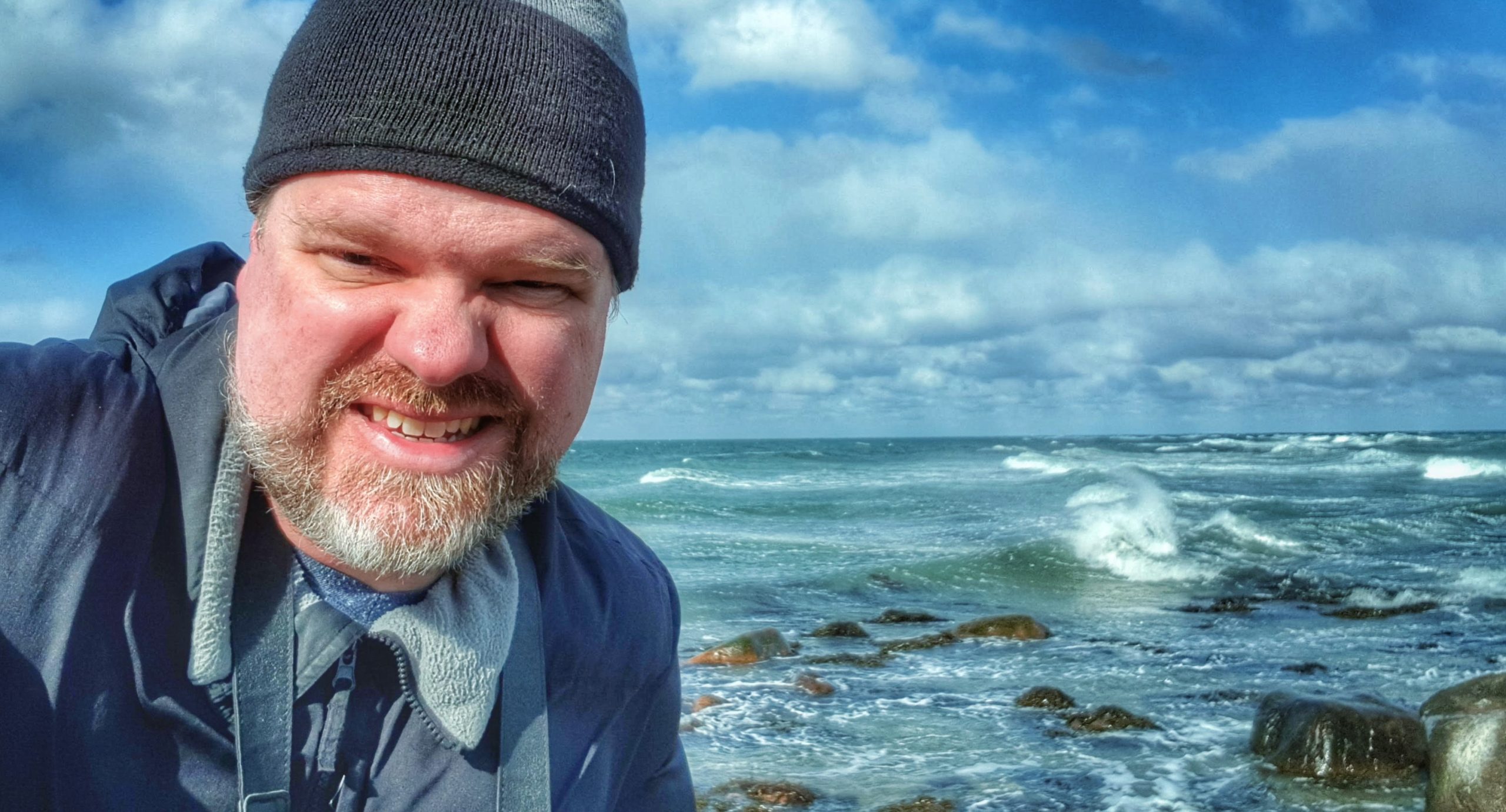
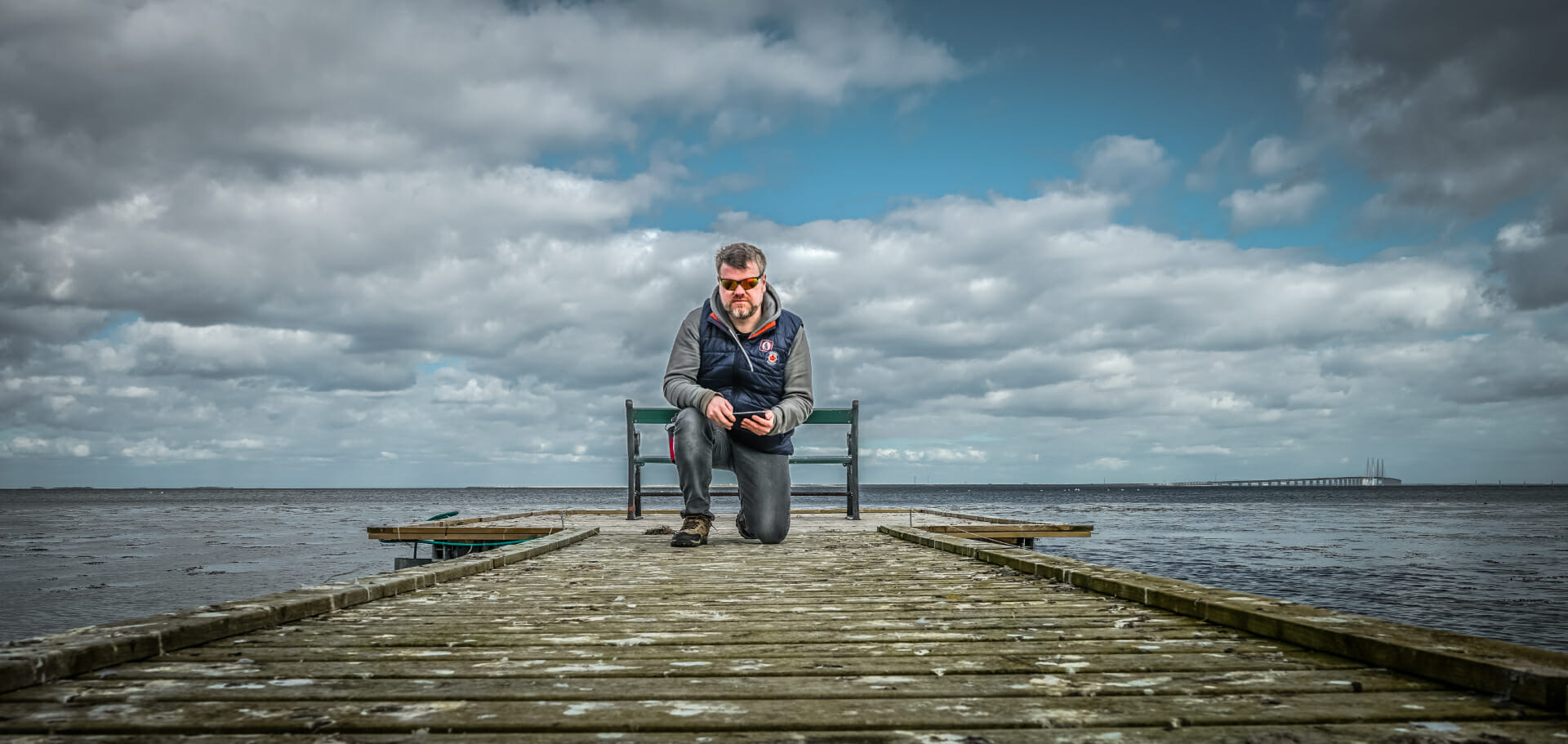
Moving on to the actual tip of the land tongue, we found ourselves on another beach every bit as brutal as the one we had just left. By this time I had somehow managed to zone in to my usual viking mode where cold doesn’t affect me much. I could still feel the pain of icy wind on my exposed skin, but this time it didn’t take away my focus or my ability to operate the camera. The result was another batch of images that I’m rather proud of, including these two… and the selfie that you see at the top of this post.

 Our next stop was the small ferry town of Rørvig (don’t even try to pronounce it if you are not Danish). We were met by another freezing sledgehammer, but the light was spectacular. Out over the sea, snow showers lingered while the sun set fire to the water. I snapped away and caught these decent images along with several others I was happy with.

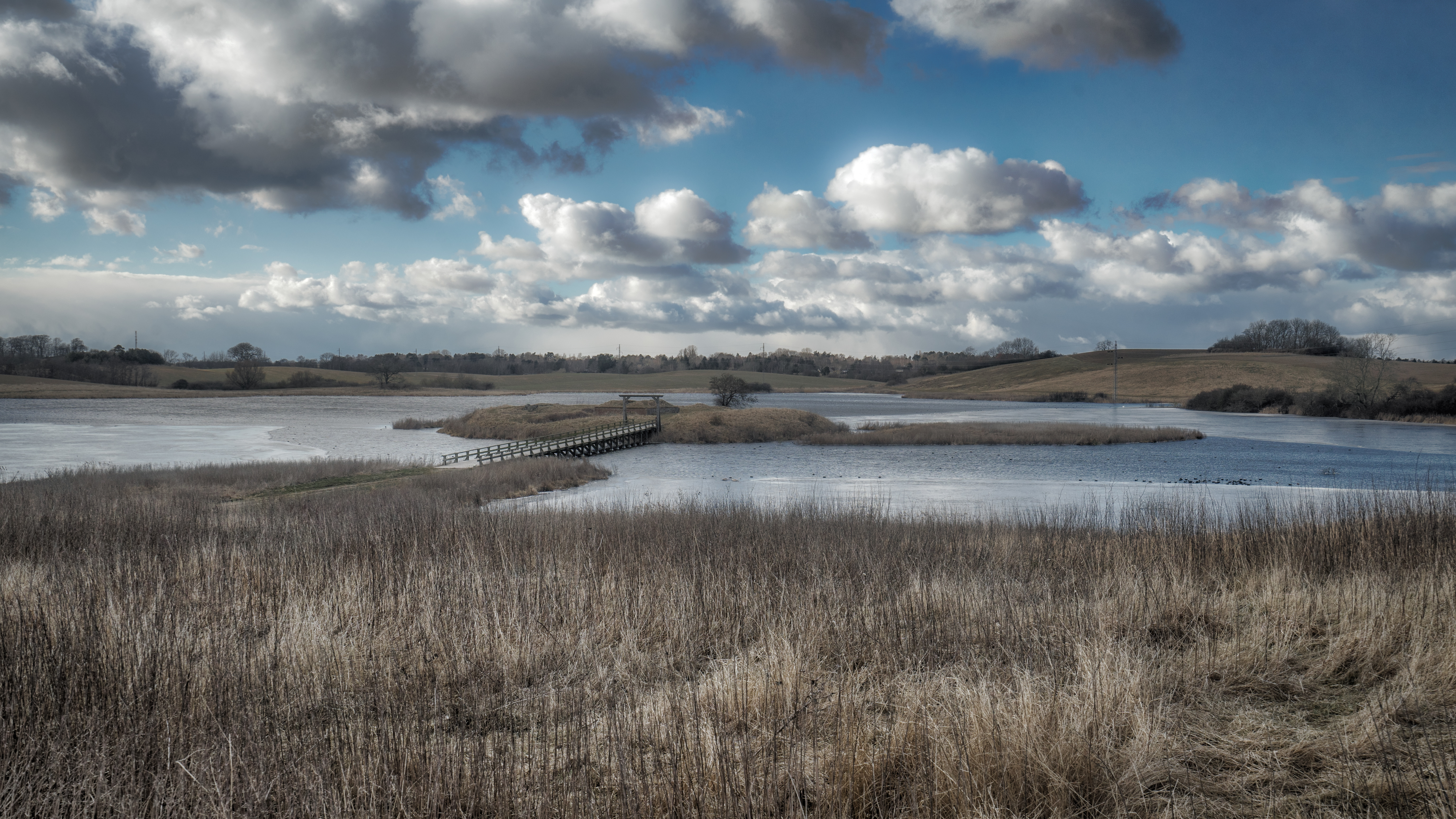
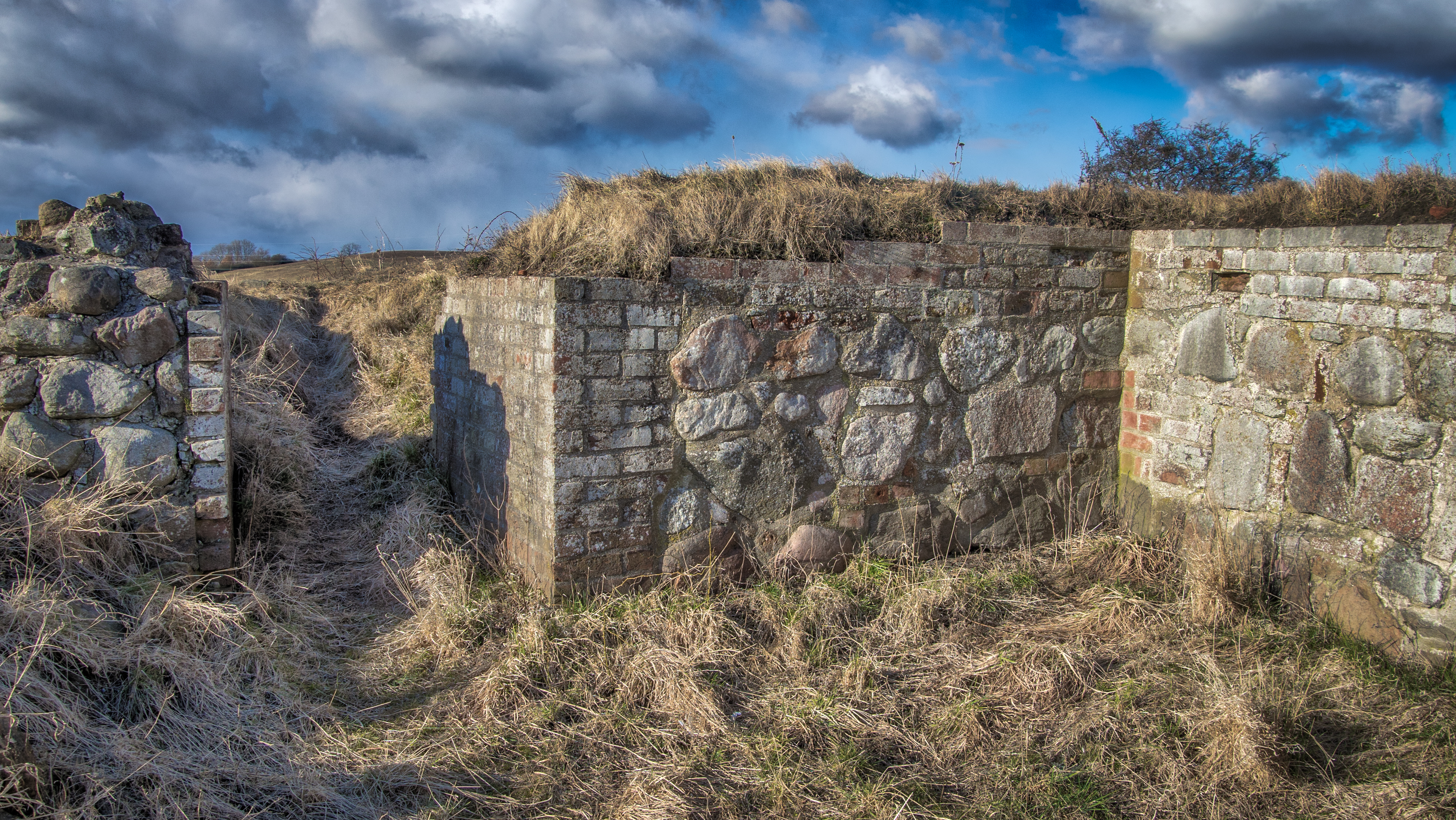
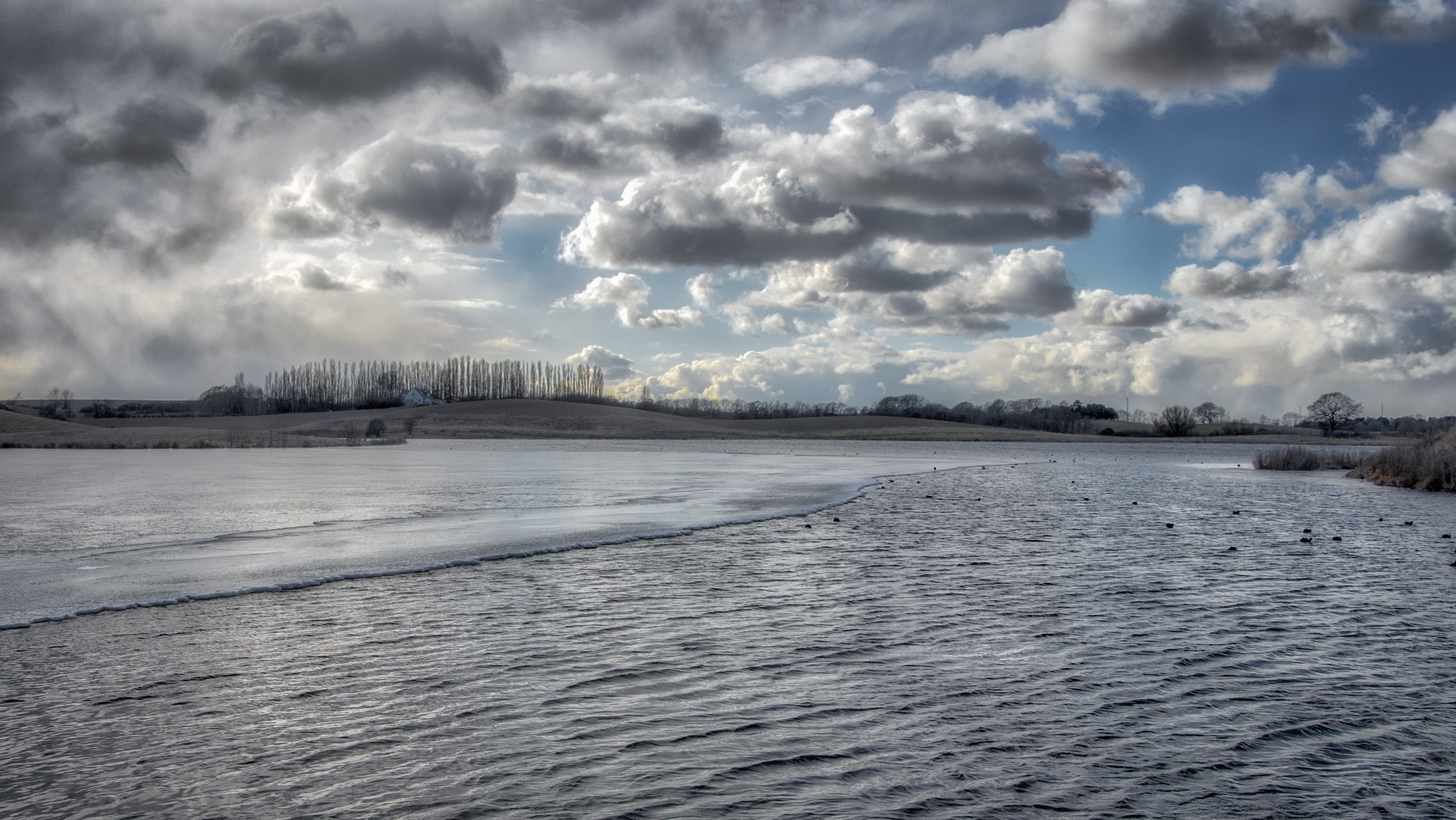
 Our last stop of the day was at the old castle ruin of Næsholm, “ruin” being the keyword. There is practically nothing left of whatever it once was, but it was still more than worth a visit. It’s located on a small island in the middle of a lake. A boardwalk bridge leads out to it, and once you are there, you are in your own tiny, little world, at peace with yourself and nature. At least, that’s how I felt. Birds were everywhere, the wind was rustling in the tall grass, and there was no discernible human activity within hearing distance.

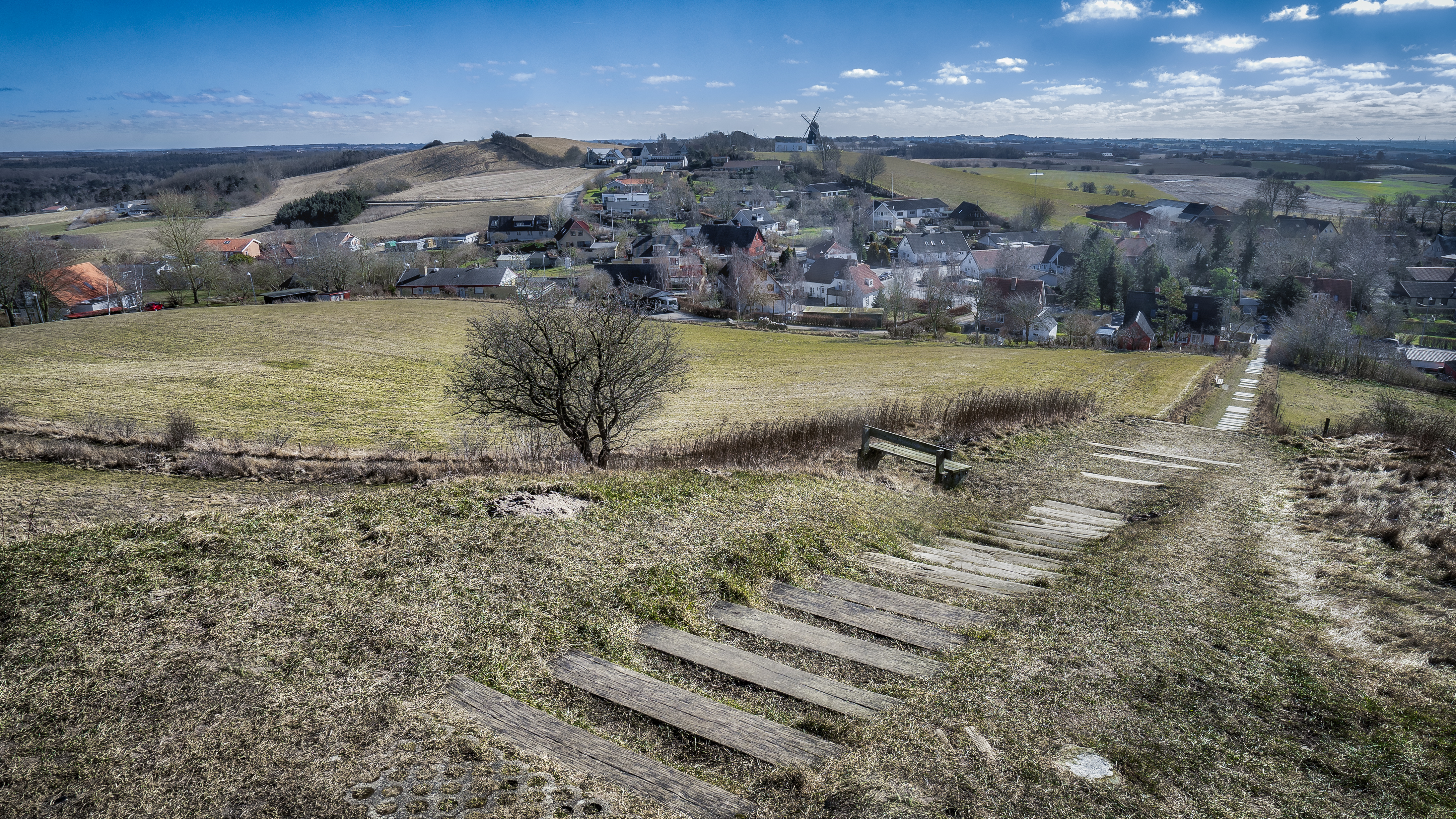
As far as the ruin is concerned, the image below pretty much shows it all.The water surrounding the lake was halfway covered with ice, making for another interesting photographic subject.After spending way too much time at Næsholm, we headed back to the hotel for some much needed warmth. It had been a busy day with lots of stops, but there were still a few places left to see. So the next – and last – day we headed out to climb some of the famous peaks of the Danish landscape. Our first stop – Esterhøj – is a whopping 89 meters above sea level (almost 300 feet!), but that didn’t stop us. We donned our ropes and helmets and walked up the stairs to the top.

The view was actually quite awesome. It was a clear day, and you could see for miles in all directions. The problem, photography-wise, was the harsh middle-of-the-day light and the fact that big, rather featureless landscapes don’t make for great images. There are no majestic mountains to serve as a backdrop. On this day there weren’t even some dramatic clouds to spice things up.

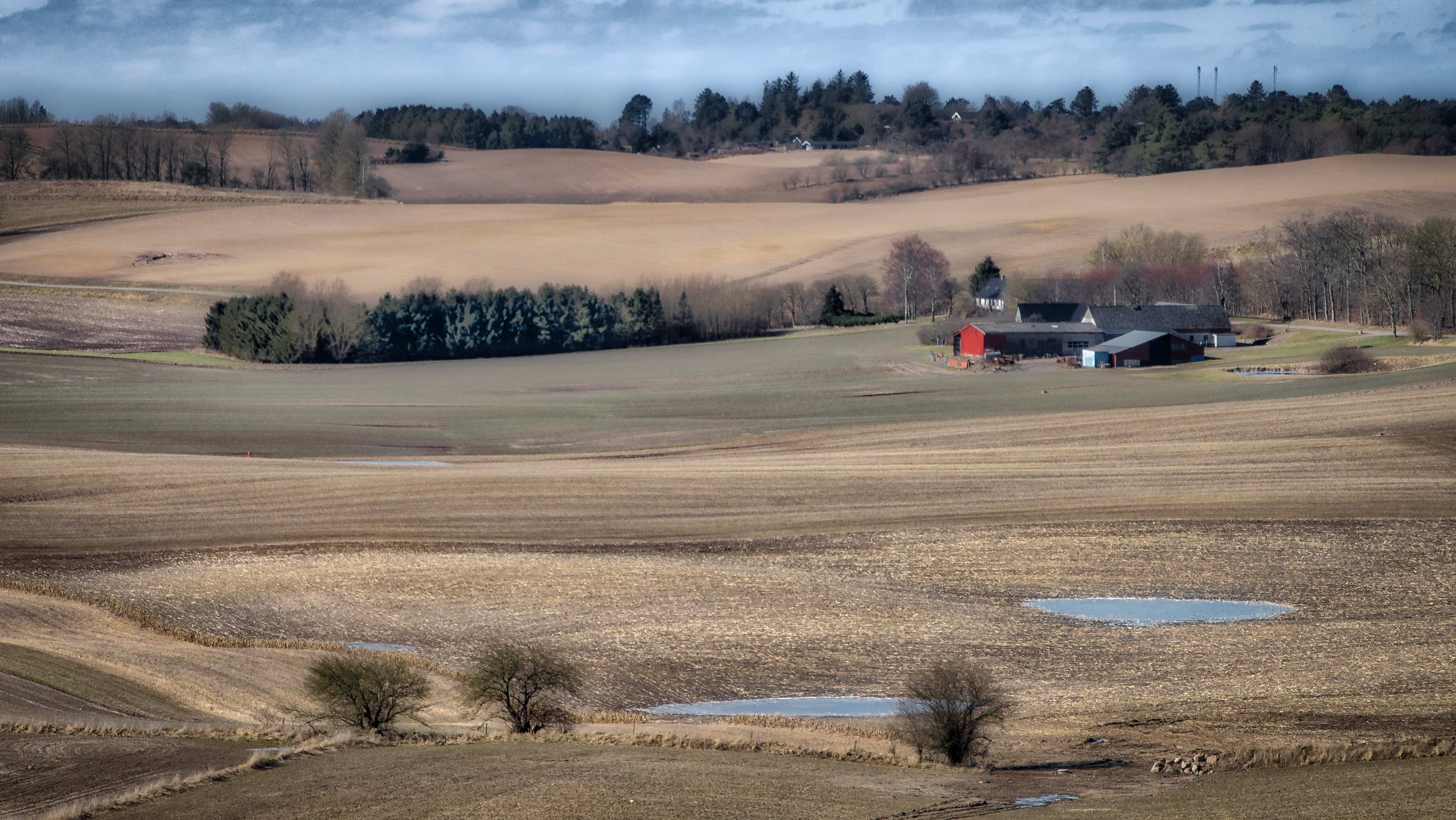
So what I did was to listen to the miniature Thomas Heaton I’ve got sitting on my shoulder and look for the small, interesting details in the landscape. I put on my 18-270 mm Tamron lens, zoomed it all the way in and scanned the landscape for compositions. And came up with this:

I’m actually quite pleased with it. The lens is not the sharpest in my collection, but what the image doesn’t have in sharpness, it makes up for in zen-ness…. or something.

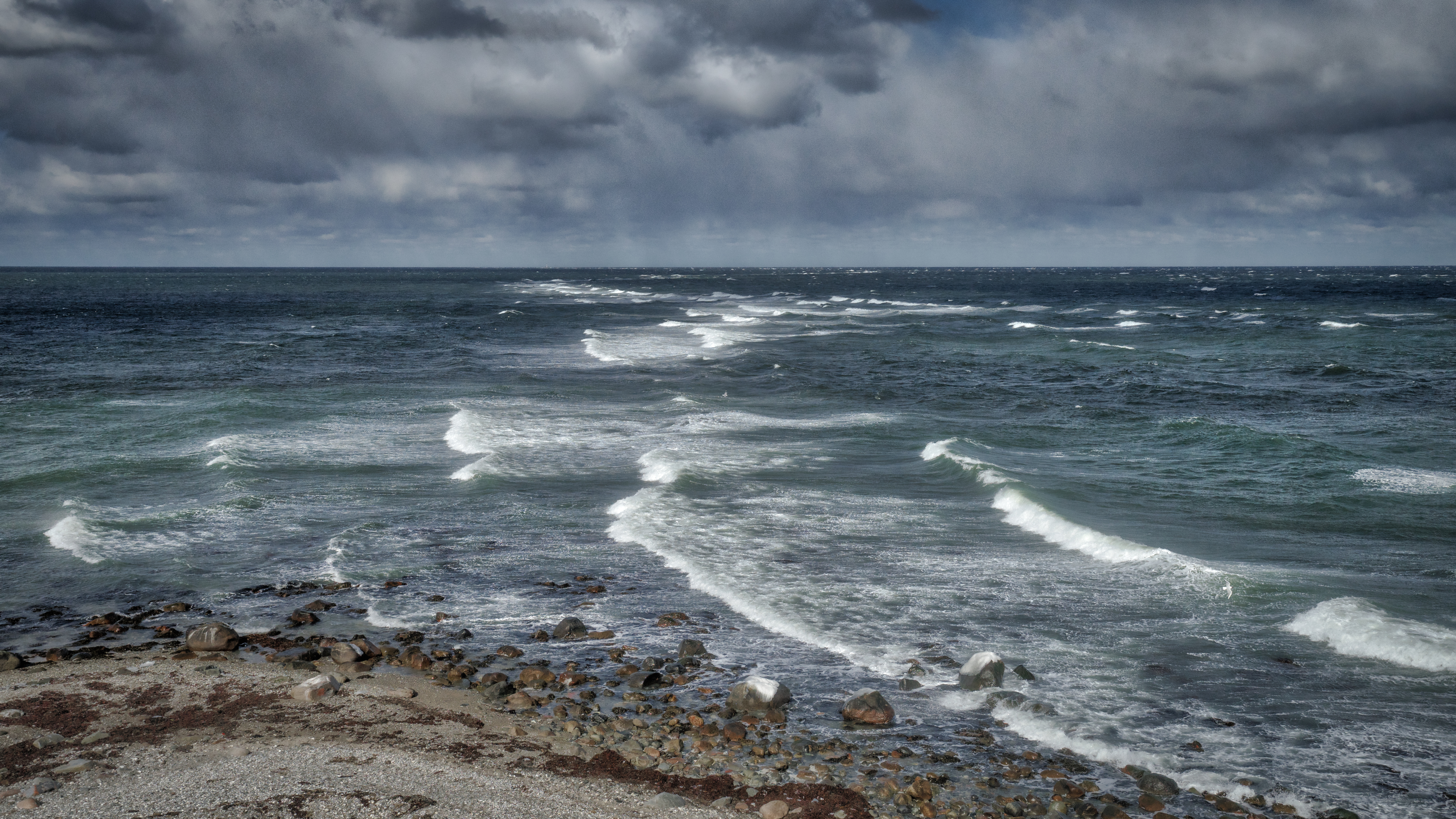
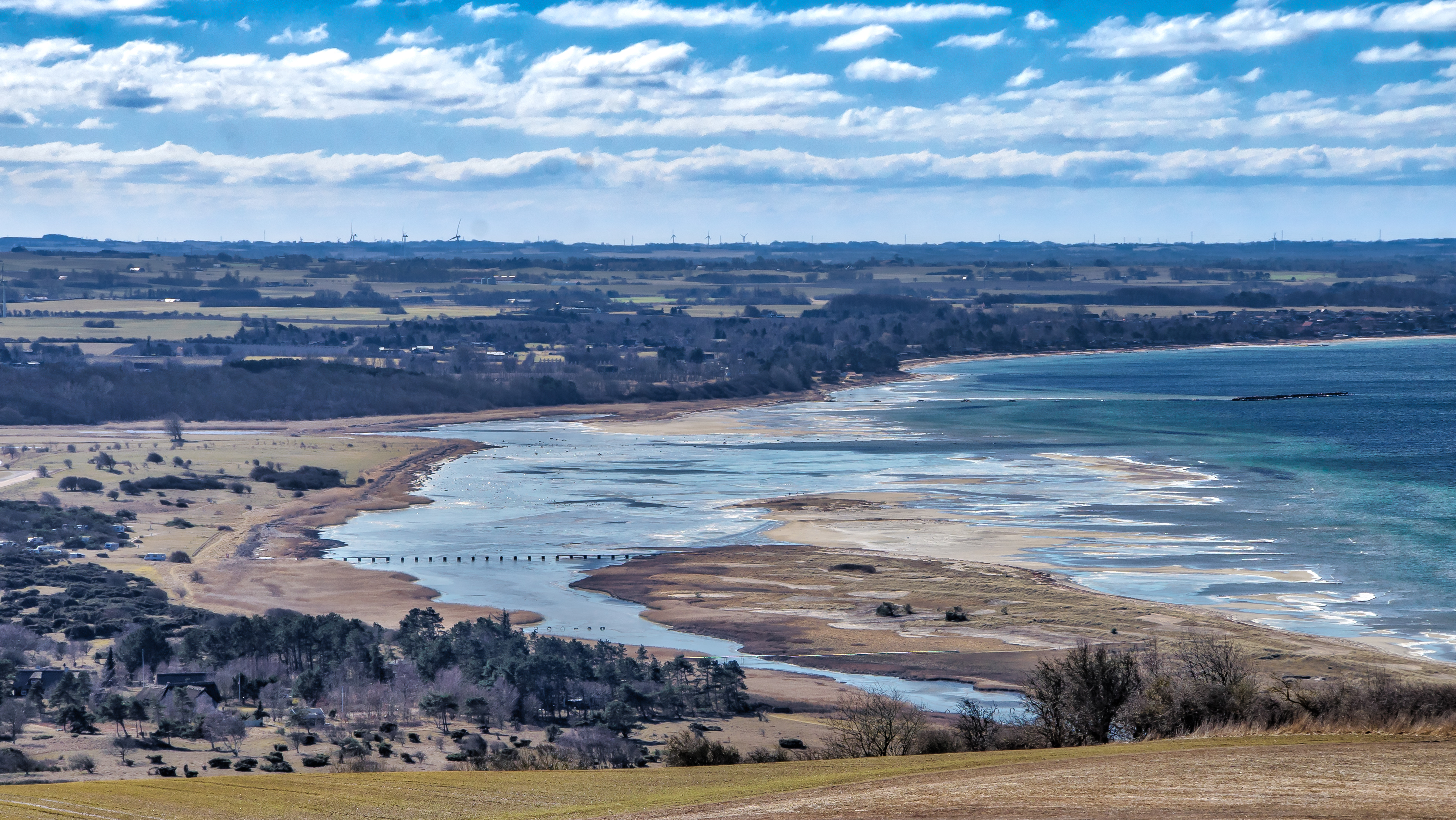
I used the same procedure for the next image, which was taken from the top of another famous hilltop, Vejrhøj. Again, the sharpness leaves a lot to be desired, but there was something about the shape of the coastline that intrigued me. And look at those white waves. They were actually moving offshore in the strong eastern wind.

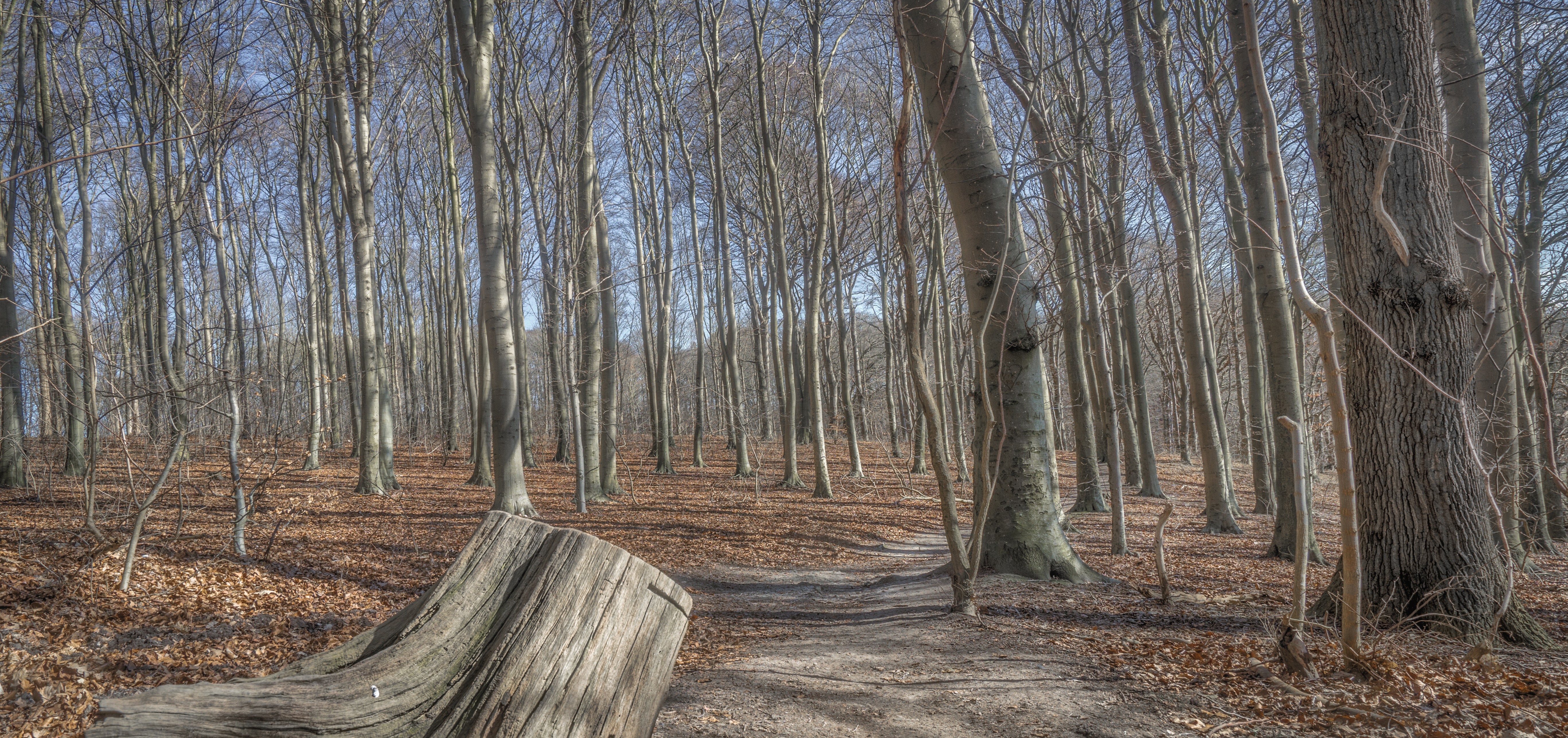
The last image was taken walking off down from Vejrhøj through a patch of woods.  As described in my last post, taking good pictures of a dreary, gray, snow-less winter landscape is a challenge, but it’s actually even harder to take pictures of a sunny, snow-less winter landscape. It’s sort of neither here nor there… It’s not dreary and it’s not uplifting, so it easily becomes just blah… But the below image was one of the few I took in that forest that I felt pretty good about.Apart from a solid lunch at a steakhouse in the town of Holbæk, thus ended our weekend adventures and, soon after, the magnetic North Pole’s passage of Odsherred. As much as I enjoy just walking around my own neighborhood taking pictures of well-known locations, there is nothing like new ground far away from home to boost your motivation and skills. You don’t have “tomorrow” or “tonight at sunset” to go out and improve the result. You need to get the best out of it here and now, bad light, freezing cold, and lack of time be damned.
For all those obstacles, I think I could have done worse.

Blessed and cursed in Iceland

Blessed and cursed in Iceland

Iceland is all landscape photographers’ dream travel destination, and back in September I was fortunate enough to spend all of 20 hours there in connection with a return flight from the US to Denmark.

The deal with Icelandair was the following: get an insanely cheap flight to US and in return spend a little time – and money – in our beautiful, volcanic country. I figured, why not? I knew that whatever I saved on the plane ticket, I’d probably spend in Iceland, but the prospect of getting to shoot some of the most fascinating landscapes in the world intrigued me.

So after a little research I booked a six-hour bus tour covering what’s known as The Golden Circle, the southwest corner of Iceland where spectacular scenery is as plentiful as it is accessible. I was ready.

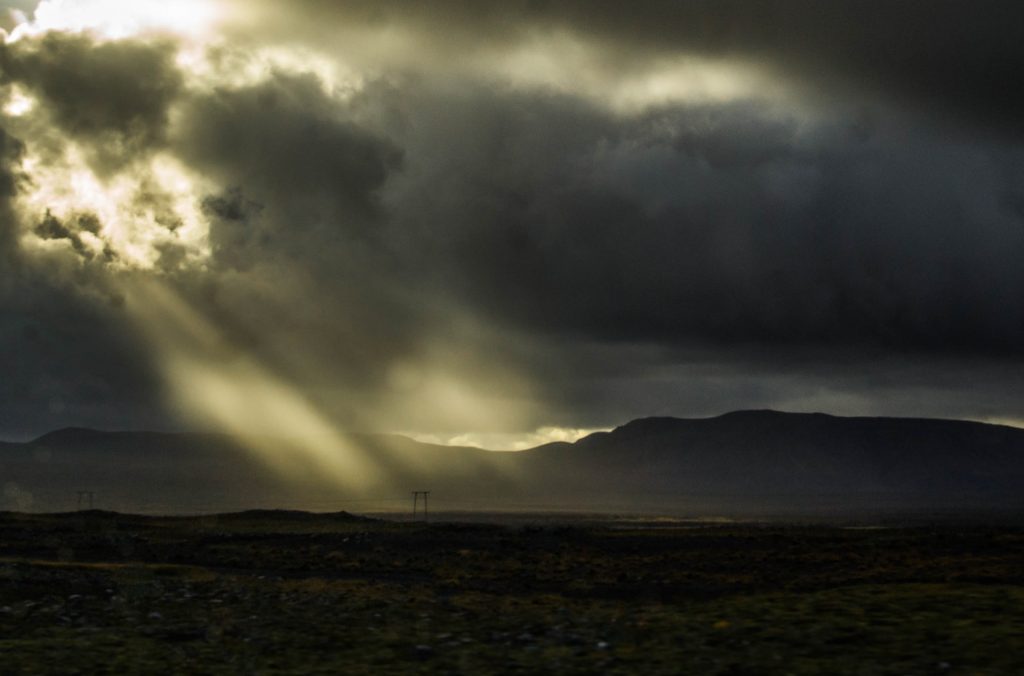
I arrived in Reykjavik at 6 o’clock in the morning on September 20 2016 after a seven-hour flight from Seattle. Having been unable to sleep on the plane, I was beginning to have some slight doubts about this whole endeavor. It didn’t help that I had six hours to kill before the bus tour even started, 50 minutes of which were spent on a shuttle bus going from the airport into the city of Reykjavik. A lot of the landscape that we passed on the way looked rather bleak, to put it mildly. The clouds were almost as black as the volcanic soil. Even the rays of sun seemed hostile, like big, extra-terrestrial search lights sweeping the ground looking for surviving humans.

Was this dark, bare landscape really the magical Iceland I had heard so much about? At this point I wished I’d just spent $200 more on that plane ticket and gone straight home to my warm, Danish bed.

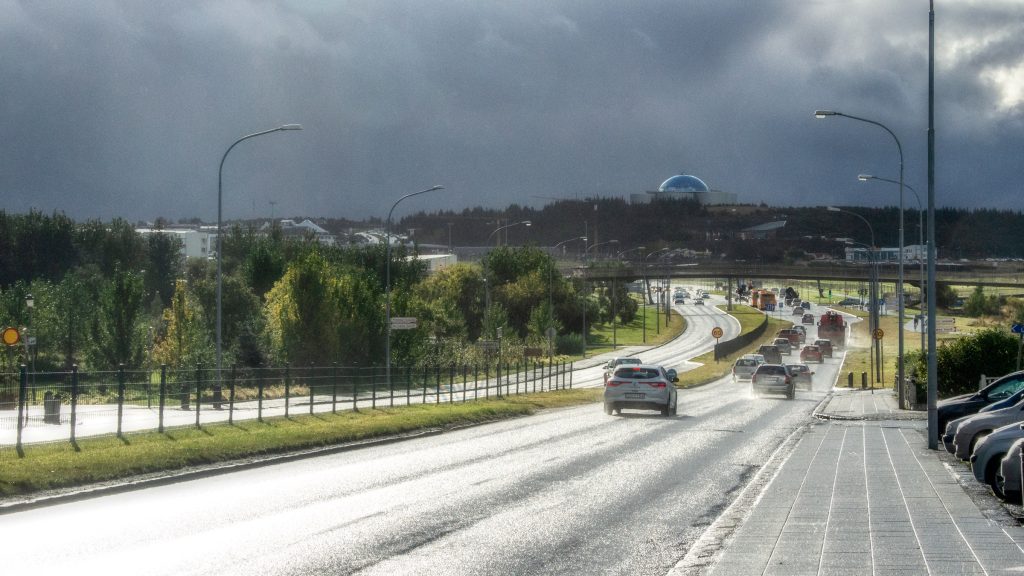
Well, it was too late for regrets. I had to make the best of it. That included walking a couple of kilometers from the bus depot to downtown Reykjavik. If the country had indeed been taken over by aliens, a good bet was that their overlord could be found inside that dome in the background of the below picture.

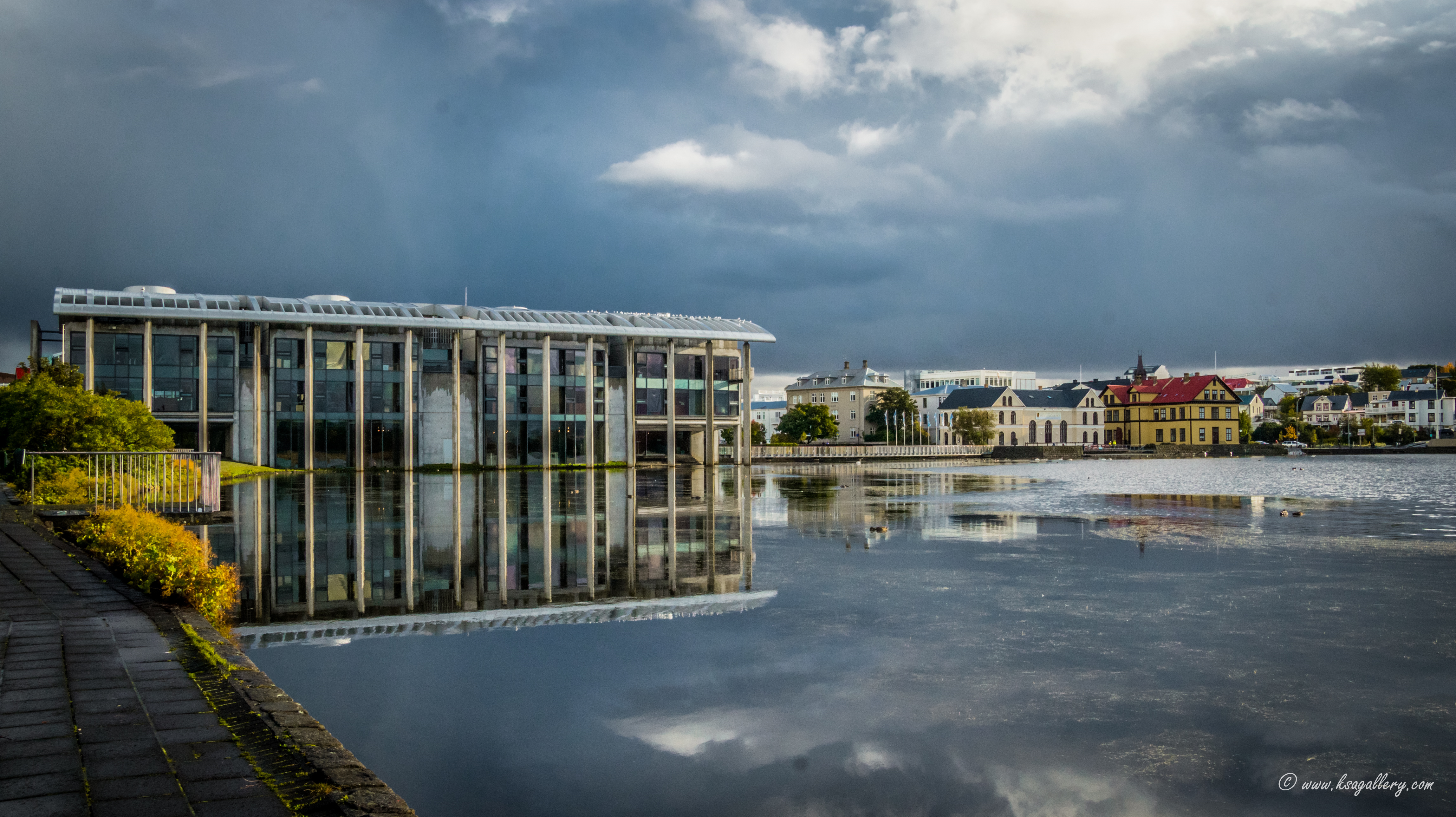
I didn’t go to find out, but continued the opposite direction and, with the help of Google Maps, soon made it to the city center. Reykjavik is much bigger than I imagined and seems to be going through both some serious growth and an architectural update, including the brand new city hall as seen here:

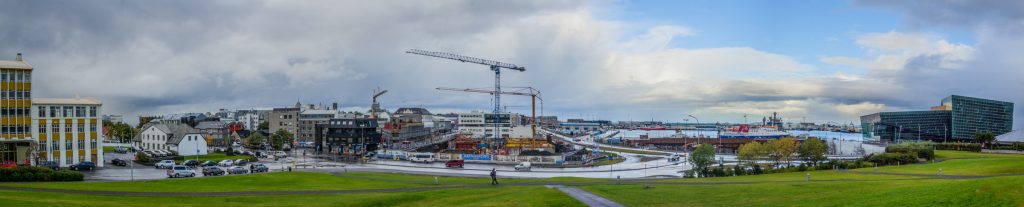
After a 30-minute pit-stop at the local public library (always to the rescue when you most need them), I was ready for a little more exploration and found my way to a park rising above downtown and offering this view of the harbor and the new performing arts center Harpa.

Then the rain started.

It had been threatening to rain since I’d left the airport. I had felt plenty of drops and hoped it wouldn’t amount to more than that, but as I continued my walk through the city, the rain started pouring from a steel gray sky from which the dots of blue and rays of sunlight had now completely vanished. I had to find refuge in a covered bus stop and sat there shivering with cold for an hour while bus passengers came and went. The fact that I didn’t take a single picture of life buzzing by on this busy Reykjavik street tells you all about my state of mind. I was hungry, tired, wet, jet-lagged, sore, and just plain miserable.

Finally, the time came when I had to go to the pick-up place for the Golden Circle bus tour. A small shuttle bus took me back to the bus depot where the actual bus departed from, and we were on our way. When I say “we” I mean myself and about 10 other tourists, the driver, and a male guide who, in his own quiet, understated way, entertained us with jokes about volcanic eruptions and all the other hard conditions Icelandic people had to endure.

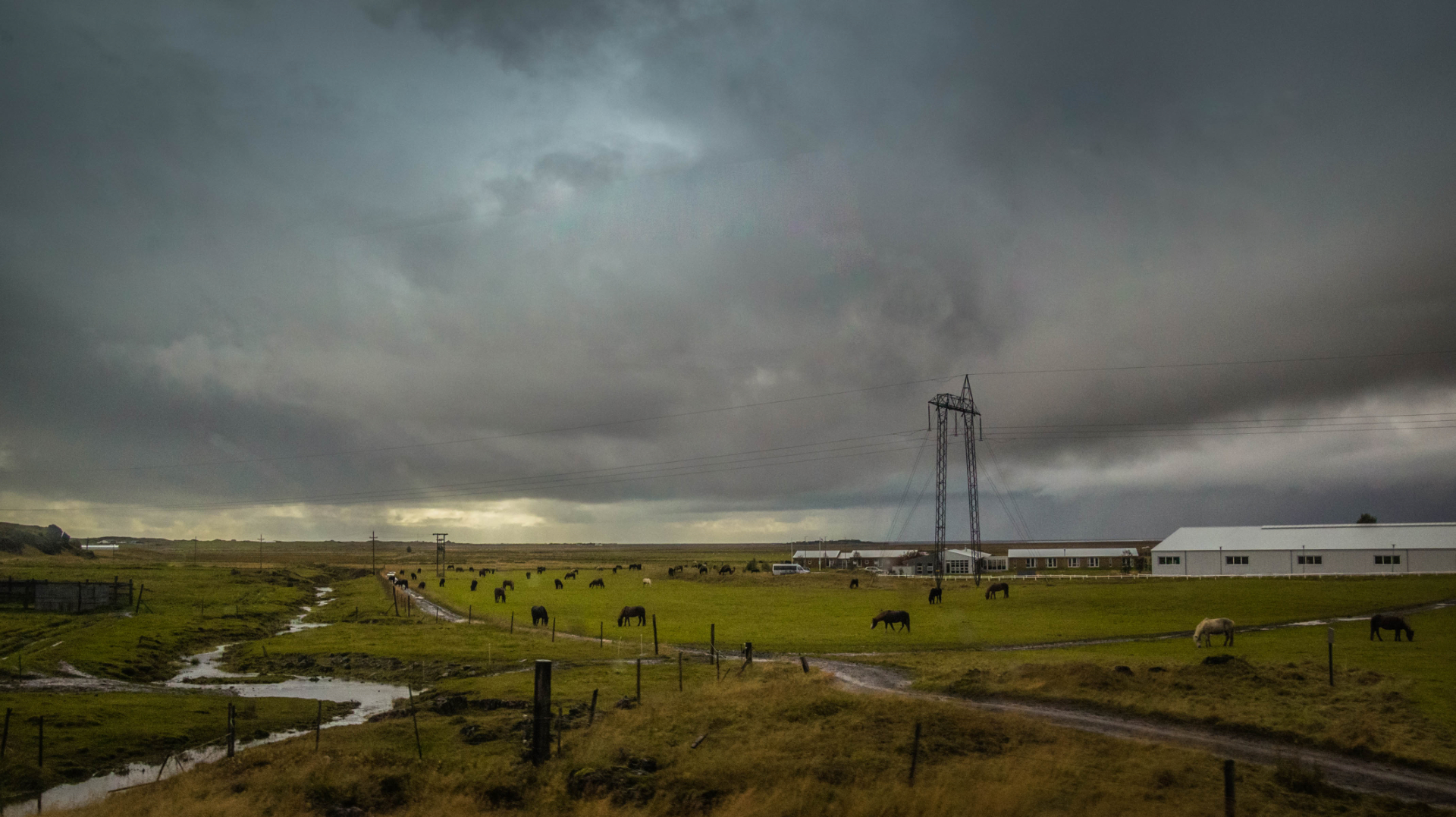
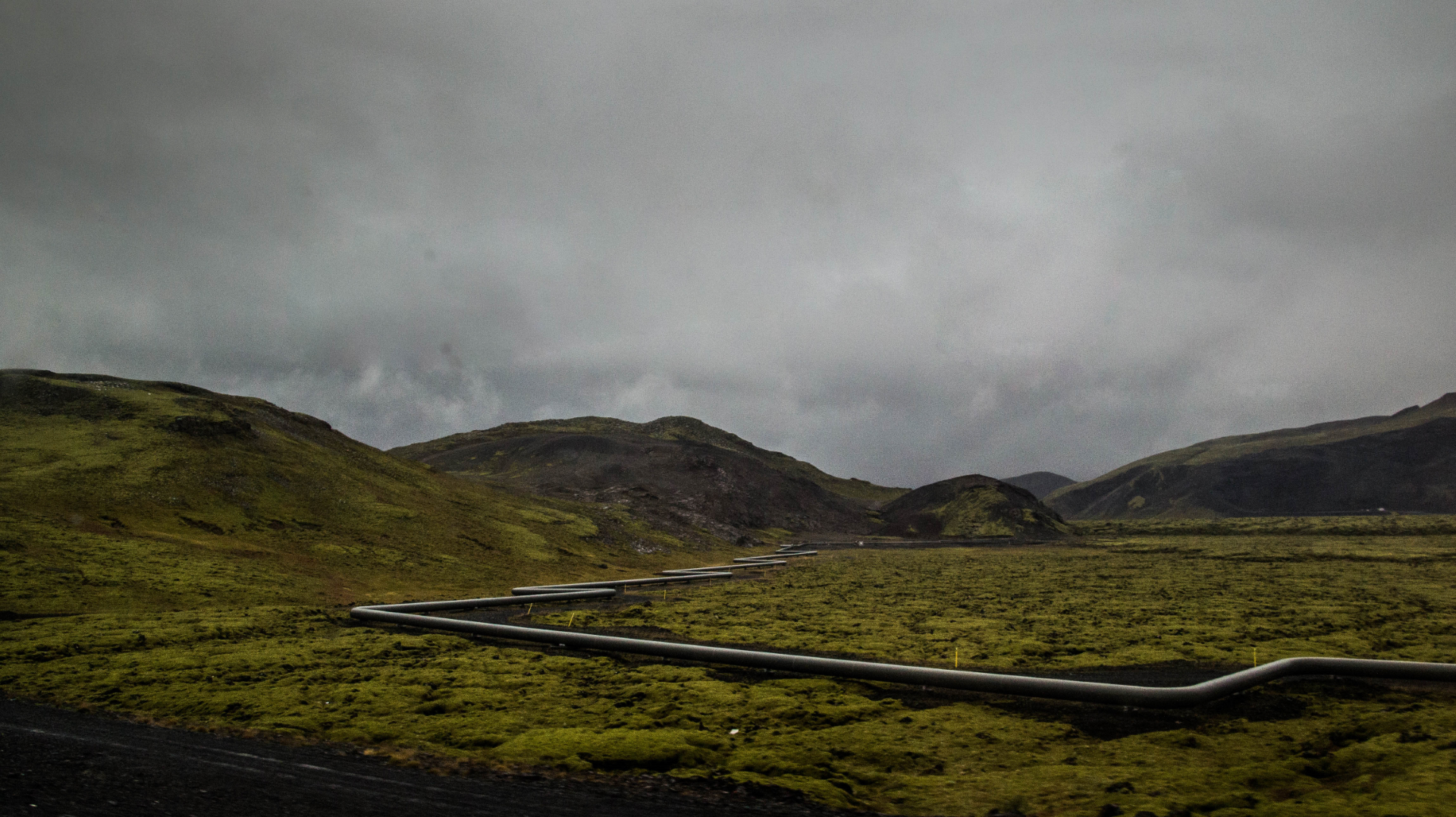
The first part of the tour went through some more bleak, and yet fascinating landscape, where overland pipelines transporting thermally heated water criss-crossed the treeless hills, and electric powerlines towered above us like deadly steel triffids.
Things became a little more hospitable when we picked up two more passengers at an idyllic horse breeding ranch. The stumpy, long-haired, and extremely tough Icelandic ponies are one of the country’s primary exports, and they supposedly cost fortunes.
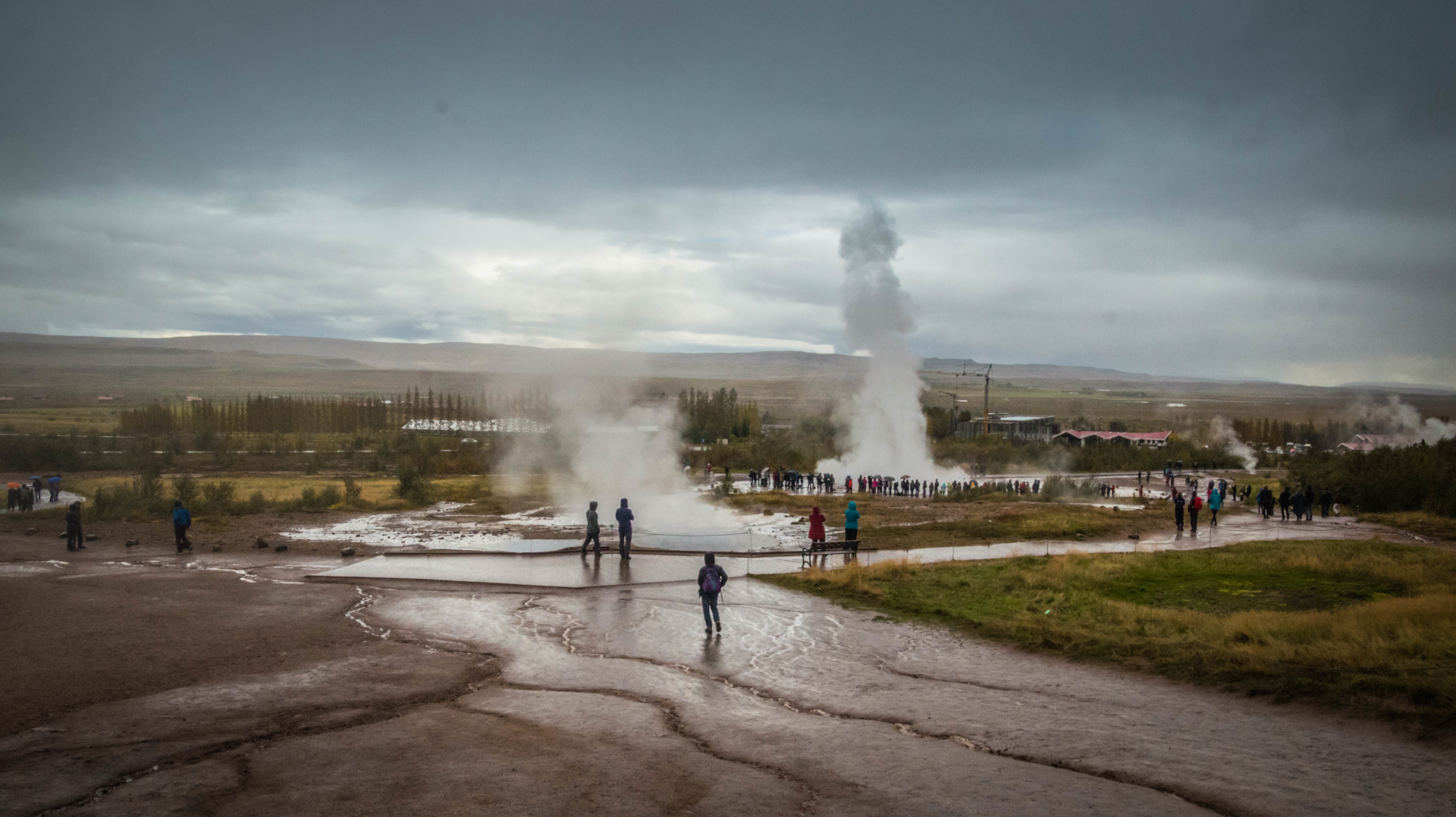
The first real stop of the tour came after about an hour’s drive (during which I think I dozed off for a few minutes, the first sleep I’d had in close to 24 hours). It was the famous Haukadalur geyser area where a geyser named Geysir actually gave name to… well… geysers.
Although I have experienced geysers several times in Yellowstone National Park, steaming water shooting out of the ground will always be one of the most awesome natural phenomenons you can witness. A short let-up in the rain even made it possible to get some decent pictures, and unlike most geysers in Yellowstone, here you didn’t have to wait hours, days or months for an eruption. This particular specimen knew how to please a crowd and released its load of boiling water every 10-15 minutes.

Before the next stop, we passed through a landscape that was turning more and more breathtaking. There were no huge mountains chains on the horizon – in fact, in places it was almost flat – but rivers and creeks were everywhere, framed by lush green colors and this characteristic soft icelandic light that despite the cloud cover still felt quite tangible.

Having not really studied the Golden Circle in advance, nothing had prepared me for what came next. Sure, the guide talked about a waterfall. I knew waterfalls. I’d seen tons of waterfalls two weeks previously in Canada. They didn’t come much better than that.

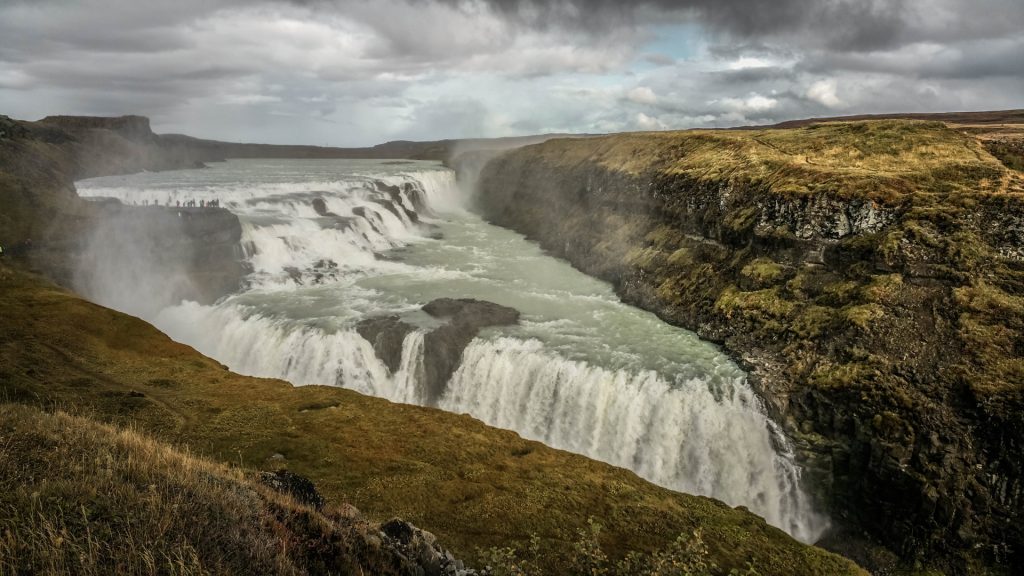
Except, they did. After a short hike from the parking lot, what revealed itself in front of me was one of the most magnificent sights my eyes had beheld in my 47 years on Earth: a waterfall the size of a 10-story apartment block. All the fatigue, misery, and pain that the day had been so full of vanished in a split second, and all I could think of was how to capture this natural wonder with my little, utterly insufficient piece of man-made technology called a camera.

You’d think the Gullfoss waterfall would be a slam dunk, but to be honest, while I’m fairly happy with the result, it does not tell half the story of what it was like to stand there. You don’t truly sense the sheer magnitude and power of all that water roaring through the canyon.

Part of the problem was not my photography skills, but the fact that the surrounding landscape was so bare. The waterfall was all there was. There was nothing to put in the foreground, nothing that could work as a scale indicator, and no sunshine or sunset to enhance the colors.

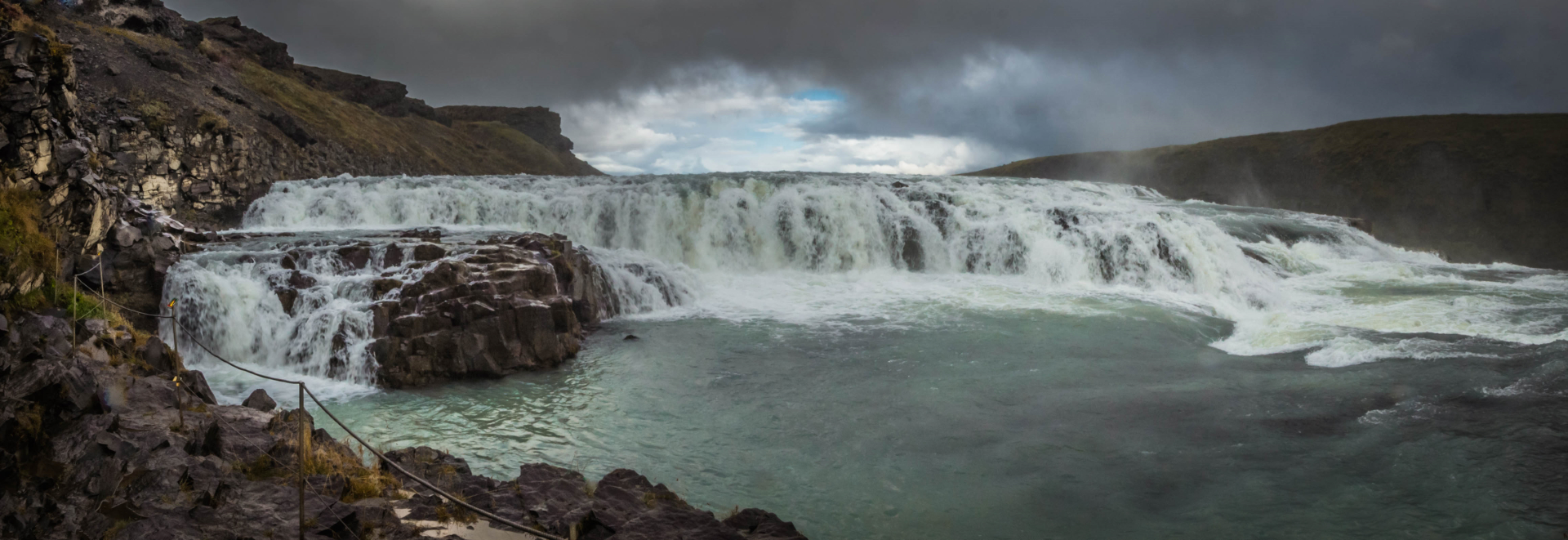
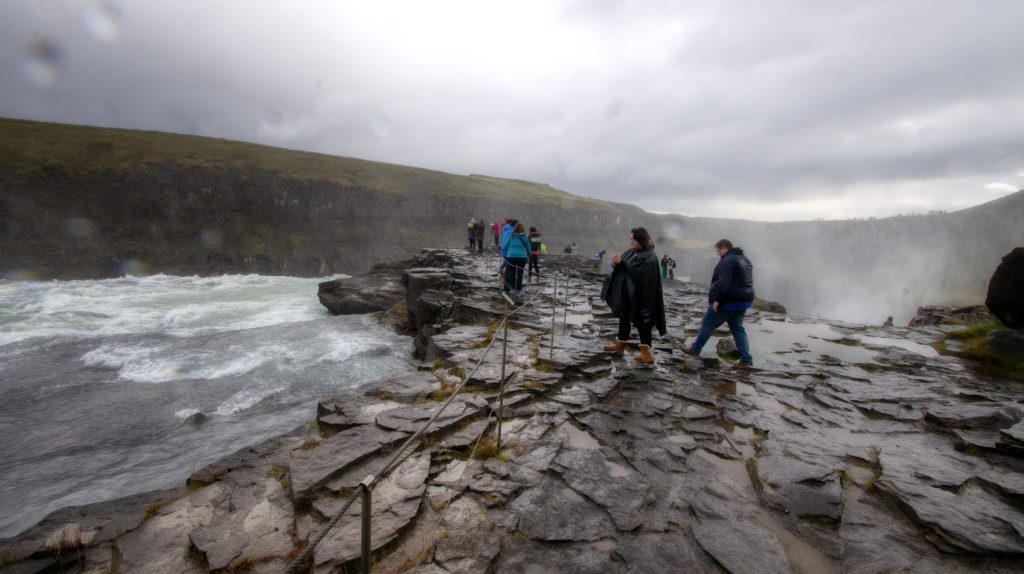
Perhaps my best capture of the Gullfoss waterfall is actually the stitch of 2-3 images, which is what you see below. I had followed a trail down to the top shelf of the waterfall where I snapped several images, including a few long exposures. My tripod was safely packed in my checked baggage at Keflavik Airport, so I had to place the camera on the rocks and use a 2-second shutter delay.

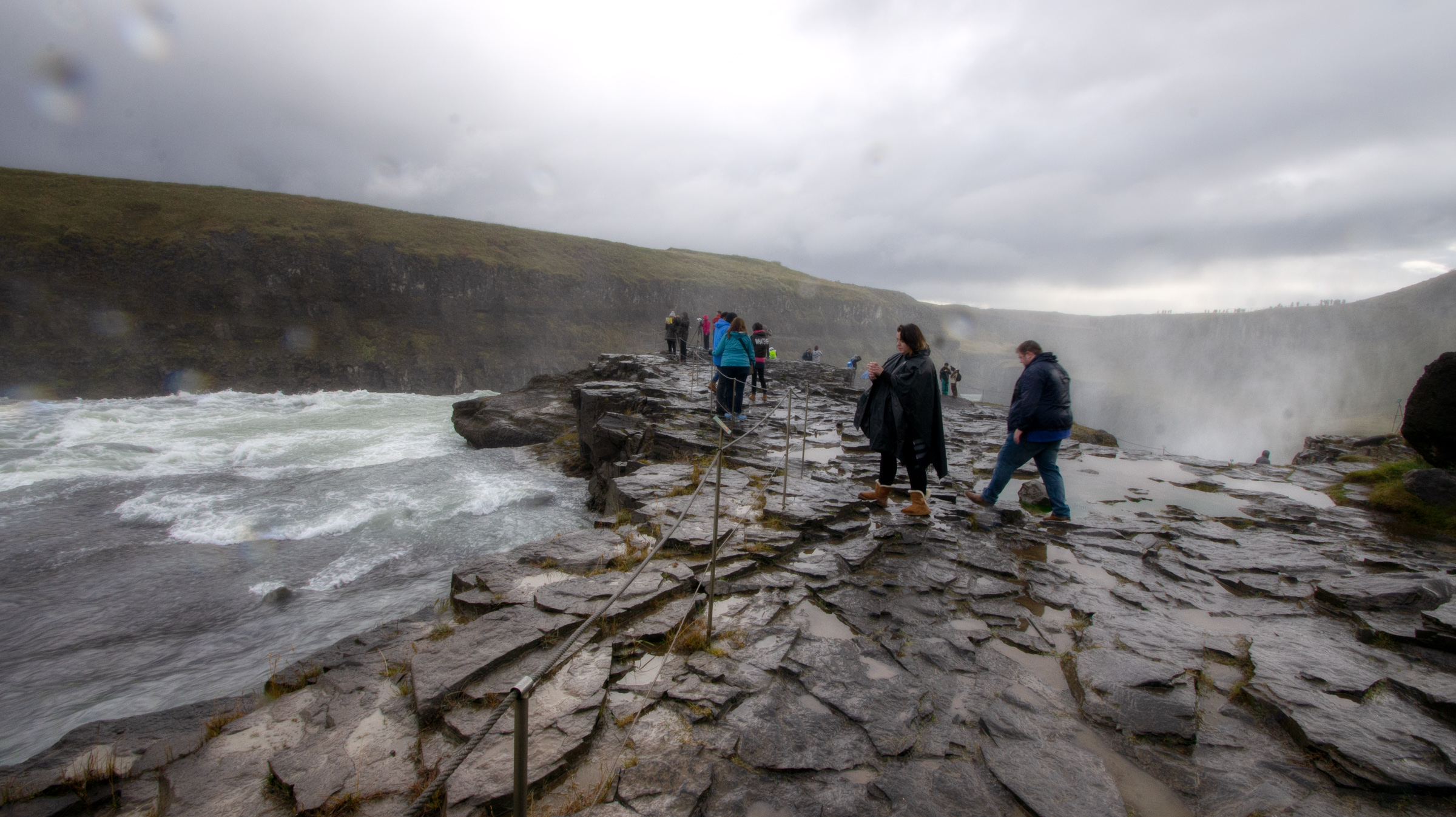
Another challenge was that the rain was starting to pick up again and that we only had about 30 minutes before departure. So I worked fast and frantically to take all the pictures I could, using two different lenses, two different cameras (my cell phone being the other one), and all kinds of settings to cover all my bases. I was actually surprised and proud of myself for not screwing things up and dropping a lens into the raging river. The last few years of frequent picture-taking has paid off. I know my camera and can almost work it in my sleep, even when things get hectic. This next picture tells you all you need to know about the conditions I was working under.

As it turned out, I was back on the bus before most everyone else, but I was happy and elated and knew I’d done what I could under difficult circumstances. I also knew that no matter what had happened earlier in the day and what would happen from then on, my Icelandic detour would have been more than worth it.

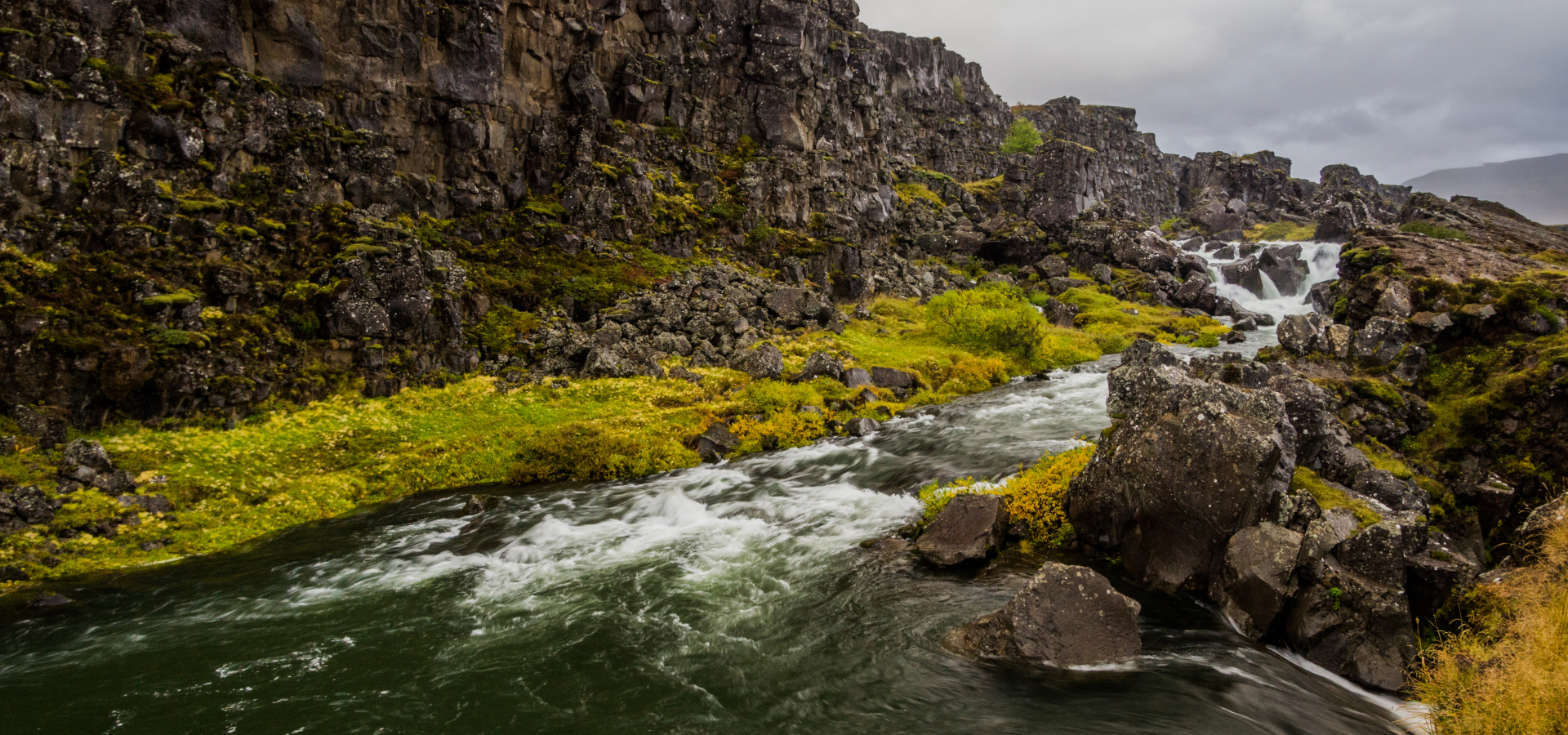
When we arrived at the last stop an hour or so later, it wasn’t just raining. It was pouring. Hard. I put my camera under my vest and walked with the rest of the party up to where the tectonic plates of Europe and North America happened to meet. Or rather, separate. It was also the location of an ancient viking parliament where the earliest Icelanders met to make decisions or put criminals to trial.

Under normal circumstances my camera shutter would have been working non-stop to capture every detail of this historically and scientifically significant spot. But the pouring rain meant I could only get the camera out from under my vest for a second or two at a time, or just enough time to point and shoot. It’s a miracle I got any useable pictures at all.

The below image is the actual rift between the two continents. In some places it’s no wider than you could stand with a foot in both Europe and North America.

While not a photographic highlight of my Icelandic adventure, the visit to Thingvellir, as the area is called, was still a mindblowing look into the past, both geological and historical. Moreover, it was a perfect end to a bus tour that, at one point I wished I’d never booked, but very soon realized would be an experience of a lifetime.

At this point I packed my camera away. I did take a couple more pictures with my cell phone on the way back to Reykjavik, but nothing spectacular. Back at the bus depot, I had to wait a couple of hours for my ride back to the airport.

After arriving at the airport, the rest of the evening until my 1 a.m. flight was spent picking up my luggage from the storage place a kilometer from the airport terminal (a distance I had to walk to and from in more pouring rain), queuing up in the only passenger queue I could find (the wrong one, it turned out… all the German voices should have tipped me off), walking what felt like three miles through the airport to my gate (I’d always thought Keflavik Airport was fairly small… boy, was I wrong), sitting in a chair at the gate for two hours unable to sleep, then lining up to board the plane only to be told it would be 30 minutes late, and then finally, FINALLY dropping into my plane seat after having walked 20,000 steps and been awake for about 35 hours.

I may have dozed off for an hour or so during the flight, but I would not get any real sleep until I was all the way home 5-6 hours later, more dead than alive, and the last 40 hours seeming like a dream – except, I had the pictures to prove that it happened.

Read More